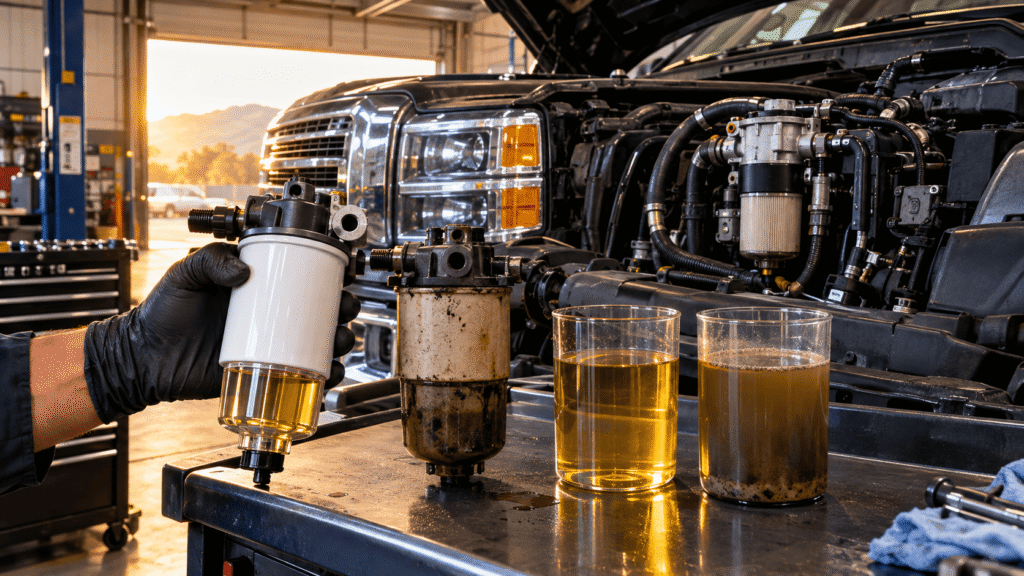
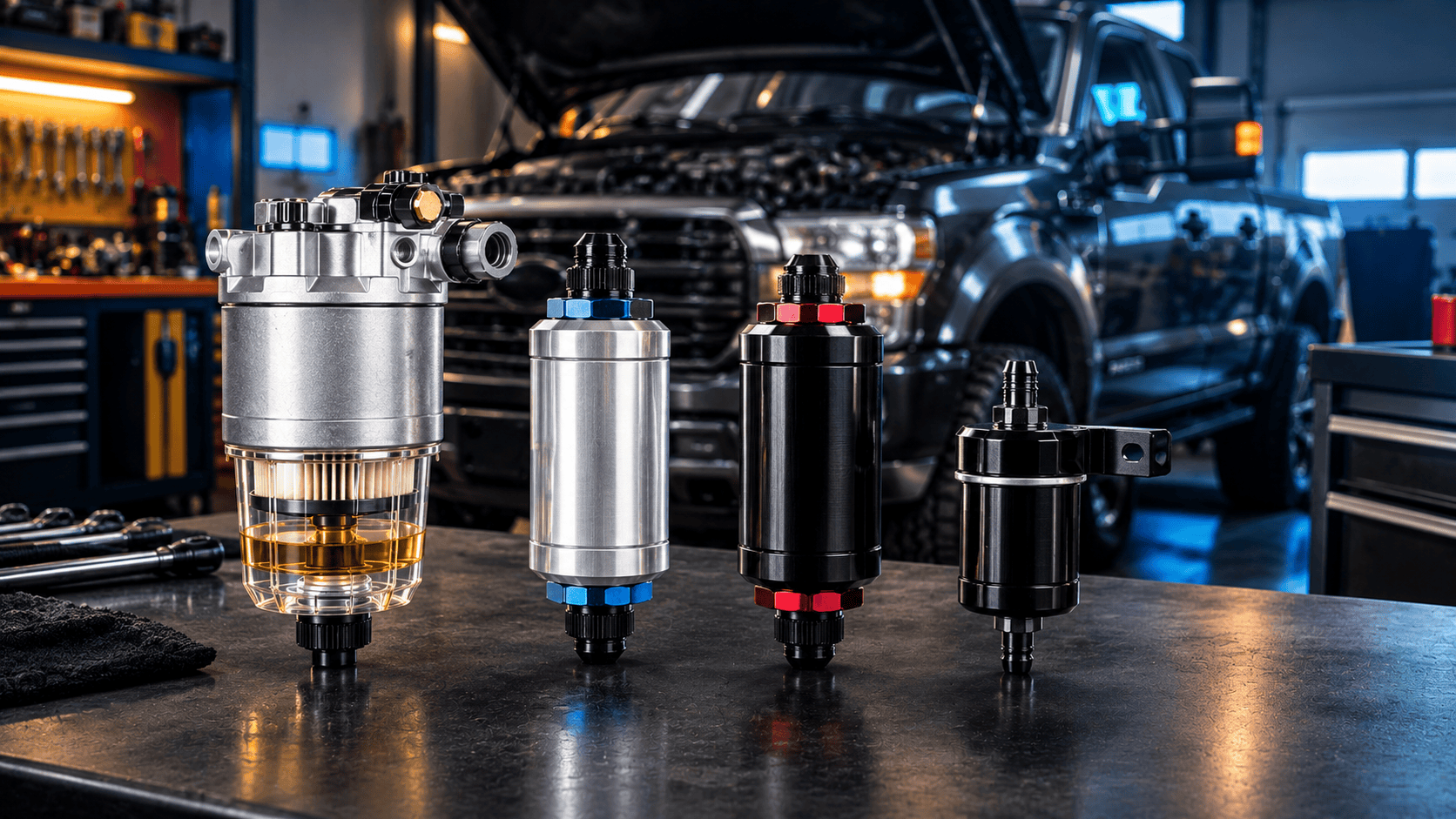
Shopping for the best aftermarket fuel filter for a diesel truck sounds simple until you start reading listings. One product says 2 microns. Another says 100 microns. Some are sold as a full water-separator kit. Others are plain inline mesh cans. It is easy to waste money on the wrong part.
This guide cuts through that. I compare four options, explain what each one actually does, and point out where each falls short. By the end, you will know which type fits your truck and your budget.
Quick Picks
Best Overall (for FASS owners): 1. FASS Titanium Series Fuel Filter and Water Separator 4-Pack, Including Two XWS-3002 and Two PF-3001 Filters.Best Value Kit: 2. EVIL ENERGY 10 Micron Inline Fuel Filter Kit with 6AN, 8AN, 10AN, 1/2″, 3/8″, 5/16″ Barb Adapters, Universal Aluminum w/Extra Replacement Filter Element & 50MM Mounting Bracket All-In-One
Best Simple AN Setup: 3. EVIL ENERGY Universal 10-Micron Inline Fuel Filter with 6AN, 8AN, and 10AN Adapters and a 50mm Mounting Clamp.
Best Budget Pre-Filter: 4. EVIL ENERGY Universal 100-Micron Aluminum Inline Fuel Filter in Black, Featuring 1/2″, 3/8″, and 5/16″ Barb Adapters and a 50mm Mounting Clamp for Compatible Gasoline and Diesel Fuel Lines.
Comparison Table
| Image | Product | Detail | Price |
|---|---|---|---|
 | FASS Titanium Series Combo Of 4 |
| Check Price on Amazon |
 | EVIL ENERGY 10 Micron Kit (with spare element) |
| Check Price on Amazon |
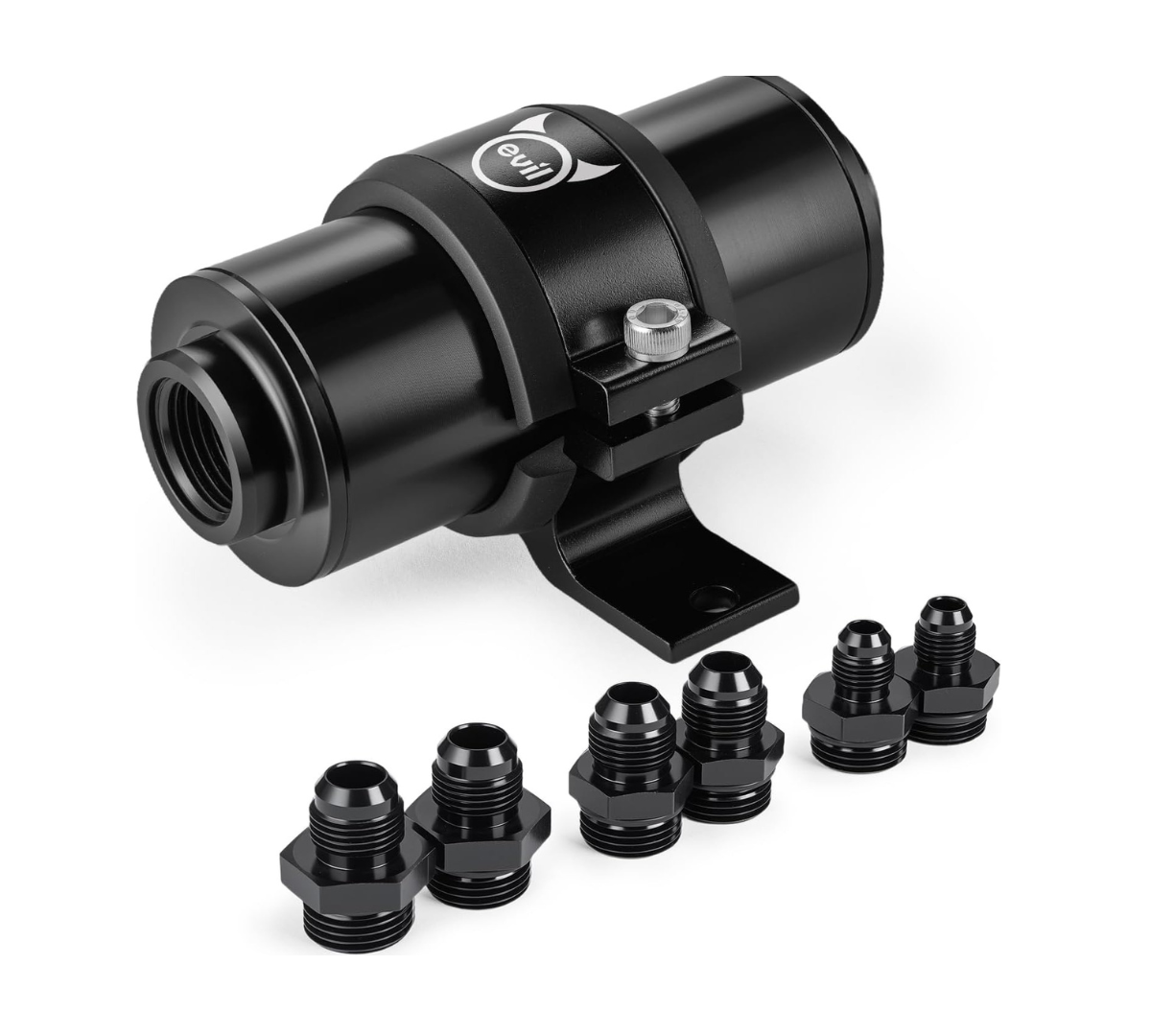 | EVIL ENERGY 10 Micron (AN adapters) |
| Check Price on Amazon |
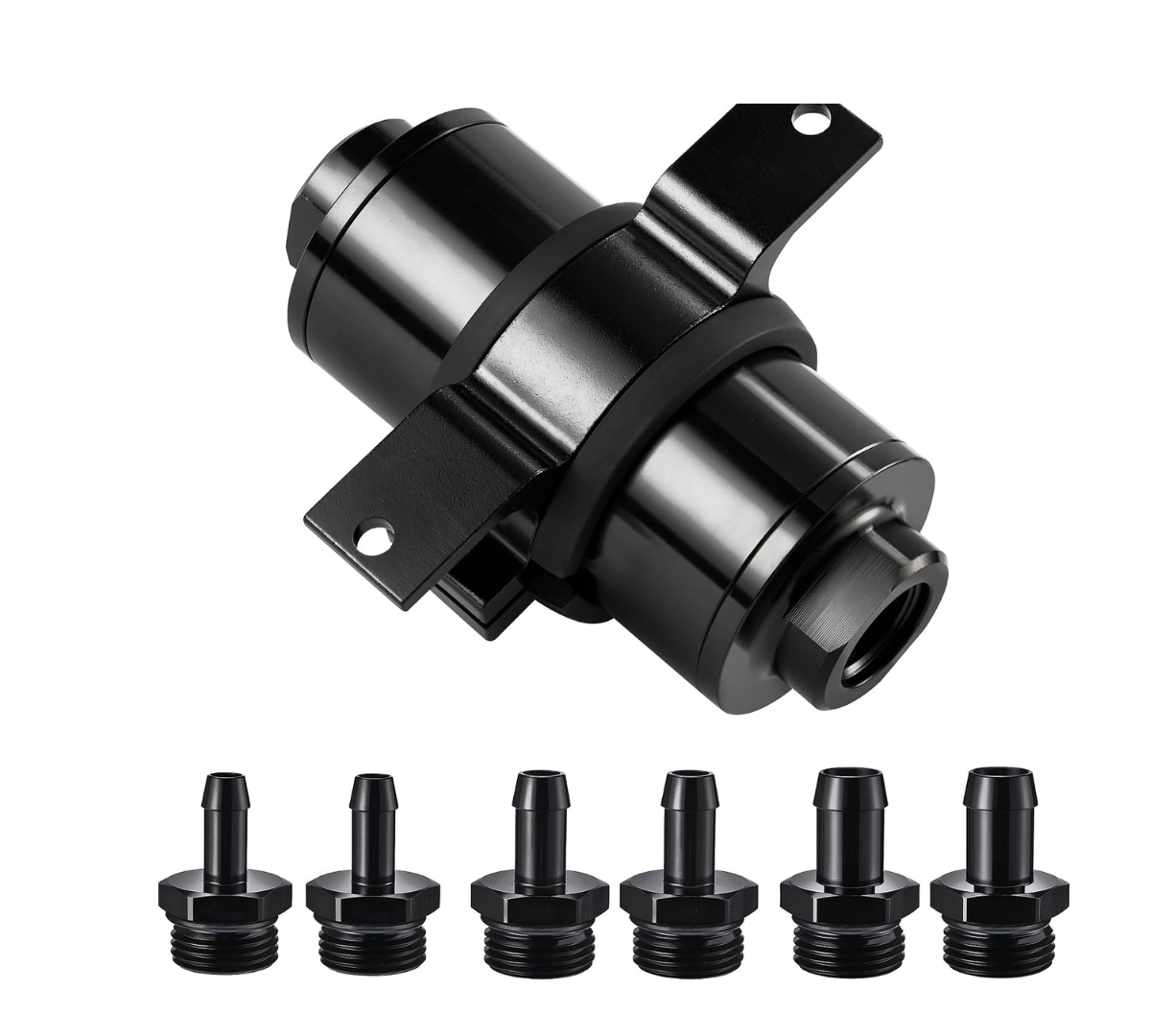 | Product |
| Check Price on Amazon |
Table of Contents
How We Chose These Products
I did not road-test these filters, and I won’t pretend I did. This list comes from careful research into each product’s listed specs, fitment details, build materials, and intended use.
I looked at five things:
- Filtration level: how fine the filter claims to catch particles.
- Water handling: whether the product separates water at all.
- Serviceability: replaceable or washable elements, and how easy upkeep looks.
- Fitment: the fittings included and the lines they suit.
- Honest limits: what each product does not do.
I also focused on what buyers of the best diesel fuel additives and similar fuel-system products usually ask: “Will this protect my injectors?” That question shaped every review below.
Read this first: A mesh filter rated at 10 or 100 microns is not the same as a fine filter rated near 2 microns. Many modern common-rail diesels need very fine filtration. Always check your owner’s manual before changing your fuel system.
Detailed Reviews
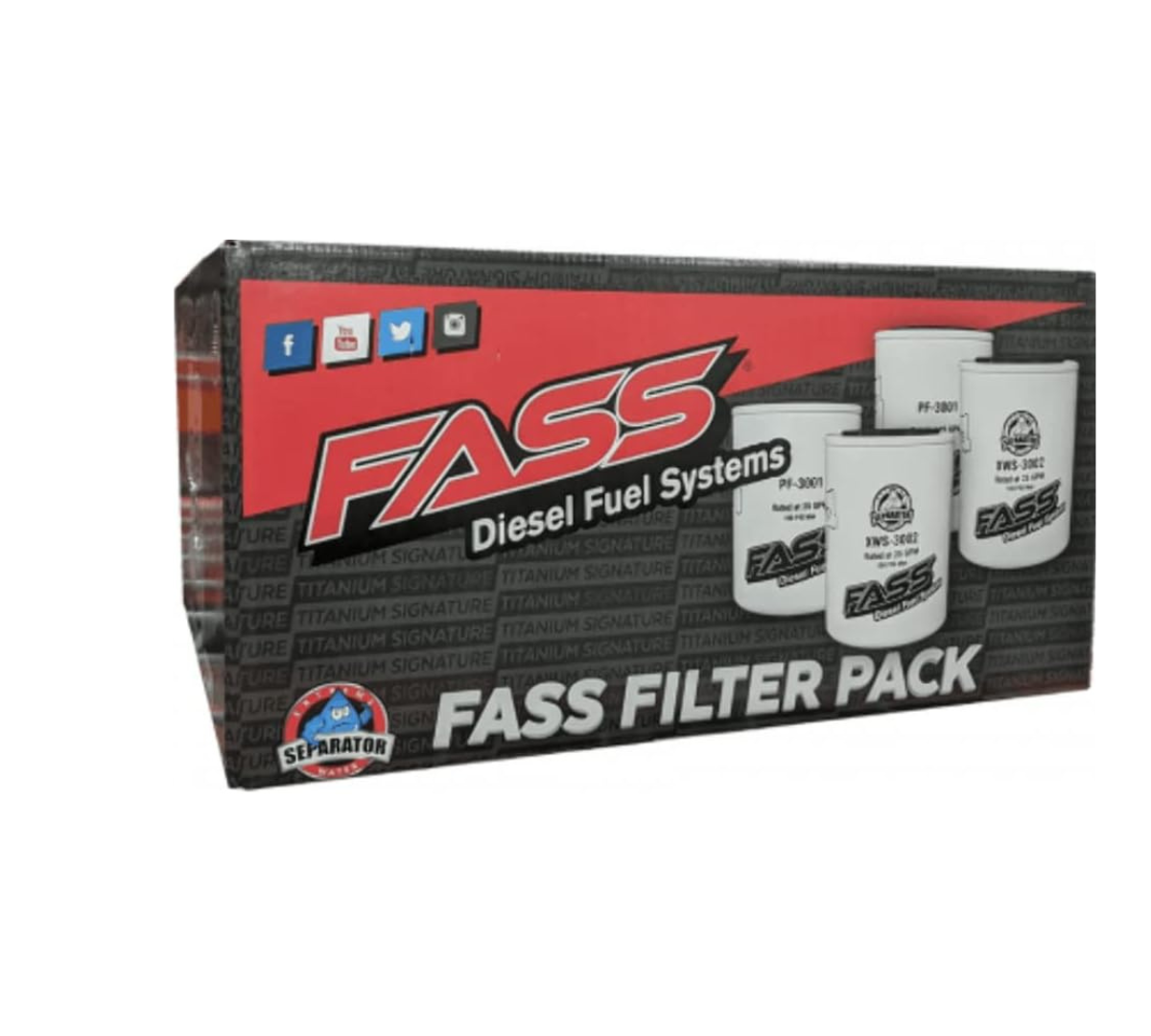
1. FASS Titanium Series Fuel Filter & Water Seprator Pack Combo Of 4 | (2) XWS-3002 | (2) PF-3001
fASS Titanium Series Fuel Filter & Water Seprator Pack Combo Of 4 | (2) XWS-3002 | (2) PF-3001
- 4-Piece Filter Pack – Includes 2 XWS-3002 and 2 PF-3001 filters.
- 2-Micron Water Separation – XWS-3002 captures water from diesel fuel.
- 144-Micron Particulate Filtration – PF-3001 removes larger fuel particles.
- Improved Fuel Flow – Helps reduce cavitation when correctly installed.
- Quieter System Operation – Helps lower FASS system operating noise
This is the only true diesel-specific maintenance pack in the group. It combines two water separators and two particulate filters so that you can service a FASS system more than once without reordering. If you already run a FASS Titanium Series lift pump system, this is the part you actually need.
Why You’ll Like It
The listing says it filters debris down to 2 microns, which suits fine-tolerance injectors.
It is listed as removing over 99% of water from diesel fuel.
The listing describes complete maintenance for up to 60,000 miles. Treat that as a best-case figure and follow your own system’s guidance.
Pros
- Handles both water and particles in one pack.
- Fine filtration listed, not just coarse mesh.
- Manufactured by a company specializing in diesel truck products.
Cons
- Made for FASS Titanium Series systems. It is not a universal filter.
- Higher upfront cost than the inline options here.
Best for: owners who already have a FASS Titanium Series system and want replacement filters in bulk.
What buyers commonly appreciate: many buyers mention that it is simple to swap and that having spares on the shelf saves a trip to the store.
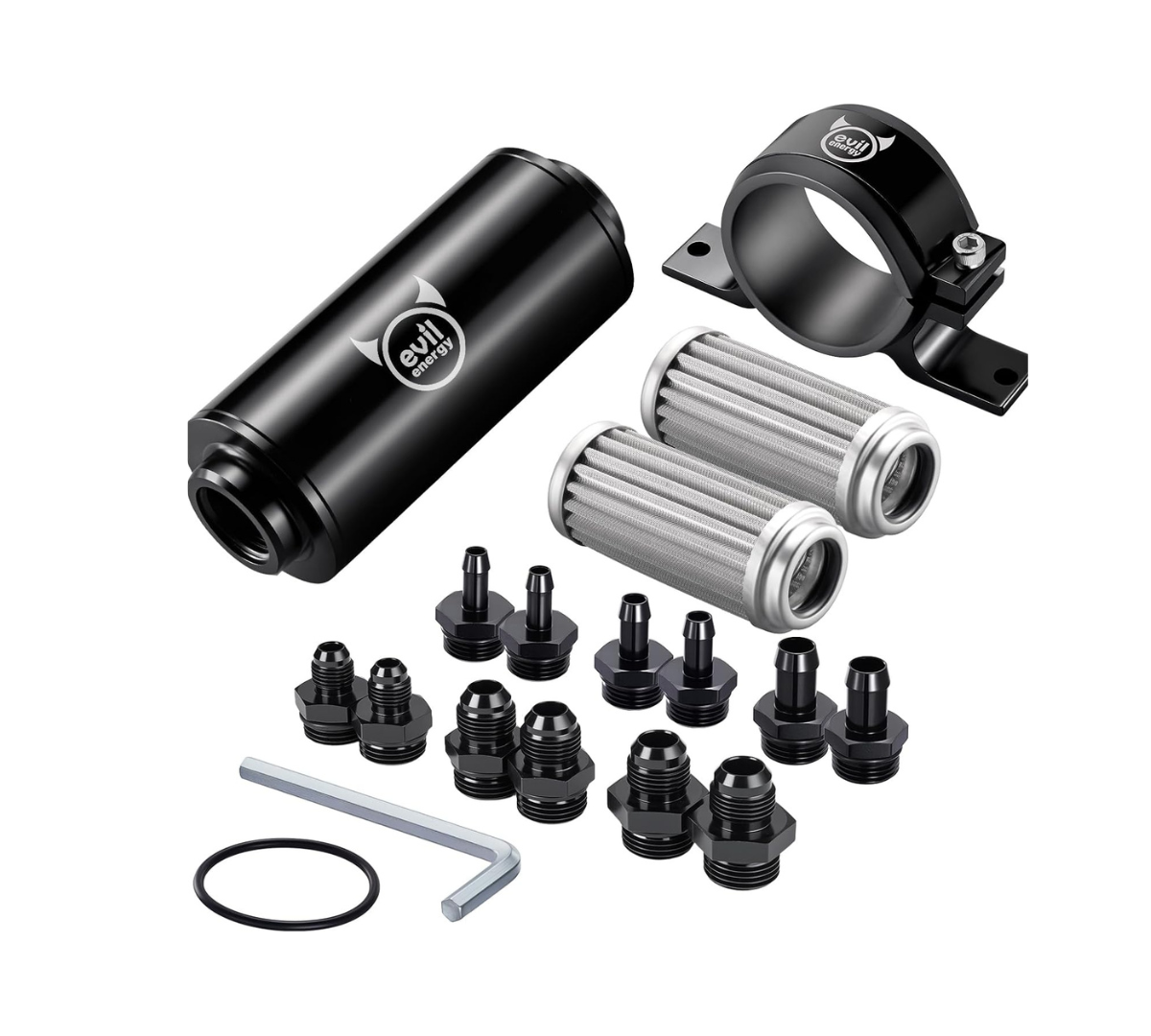
2. EVIL ENERGY 10-Micron Inline Fuel Filter Kit
EVIL ENERGY 10-Micron Inline Fuel Filter Kit
- 10-Micron Filtration
- Durable Aluminum Housing
- Multiple AN and Barb Adapters
- Extra Replacement Filter Element
- 50mm Mounting Bracket Included
This kit is built for people who hate hunting for fittings. It ships with both AN and barb adapters, a bracket, and a spare washable element. You can swap in the clean one while you wash the dirty one.
Why You’ll Like It
Fits braided AN lines and rubber hose, so it adapts to more setups.
The spare element cuts downtime during cleaning.
The aluminum body resists corrosion better than plastic.
Pros
- Complete kit with many fitting options.
- Two reusable stainless elements included.
- Removable end cap makes cleaning easy.
- Works with gasoline or diesel (not E85, per the listing).
Cons
- 10-micron mesh is much coarser than a fine diesel filter.
- No water separation.
Best for: older or simpler diesel setups, project trucks, and low-pressure supply lines where a washable filter makes sense.
What buyers commonly appreciate: many buyers say the kit feels well-made for the money and that the extra element is a nice touch.
3. EVIL ENERGY 10-Micron Inline Fuel Filter
EVIL ENERGY 10-Micron Inline Fuel Filter
- 10-Micron Filtration
- 6AN, 8AN, and 10AN Adapters
- Durable Aluminum Housing
- 50mm Mounting Bracket
- Universal Inline Design
This is the lean version of the kit above. It features a matching 10-micron stainless steel filter element housed in an aluminum body and comes with AN adapters only. If your truck already runs AN-style lines, it keeps the install tidy and simple.
Why You’ll Like It
Clean look with a mounting bracket included.
The product listing specifies O-rings to help create a secure seal around the fittings and end caps.
The element is removable, so cleaning is straightforward.
Pros
- Simple, focused package.
- Three AN adapter sizes cover common lines.
- Aluminum can with stainless element.
- Easy to inspect and clean.
Cons
- No spare element in the box.
- Same 10-micron limit and no water separation.
Best for: Builders running braided AN lines who want a clean, low-cost inline filter.
What buyers commonly appreciate: Many buyers mention that it is easy to set up and looks neat under the hood.
4. EVIL ENERGY 100-Micron Universal Inline Fuel Filter
EVIL ENERGY 100-Micron Universal Inline Fuel Filter
- 100-Micron Filtration
- Black Aluminum Housing
- Three Barb Adapter Sizes
- 50mm Mounting Bracket
- Compatible with Gasoline and Diesel Fuel Lines
This one is a coarse strainer, not a final filter. Its job is to stop bigger debris before it reaches a pump or a finer filter. The listing also shows other micron options for this style, so you can pick a finer element if you want one.
Why You’ll Like It
Barb adapters fit common rubber fuel hose sizes.
Works as an extra layer of protection ahead of a lift pump.
Washable element keeps running costs low.
Pros
- Easy to install on rubber hose.
- Lets fuel flow freely with little restriction.
- Aluminum can with stainless element.
- Good as a first-stage pre-filter.
Cons
- No water separation.
- Barb fittings are not ideal for high-pressure lines.
Best for: tanks, transfer lines, and pre-filtering ahead of a finer primary filter.
What buyers commonly appreciate: many buyers say the fittings are easy to work with and the build feels solid for the price.
Buyer’s Guide: How to Pick a Diesel Fuel Filter
Understand the micron rating.
A micron is one-millionth of a meter. A lower number means the filter catches smaller particles. A 2-micron filter stops far finer debris than a 100-micron mesh.
Many modern diesel engines use high-pressure injection with very tight tolerances. Learn what your engine requires in the owner’s manual, and read the EPA diesel fuel standards page to see why today’s fuel is cleaner but still needs good filtering. You can also browse DieselNet for technical background on diesel engines and fuel.
Think about water
Water in diesel causes rust, poor lubrication, and bacterial growth. A mesh filter does not remove it. If you often fill up at busy stations or store fuel, a water separator matters. Our guide on how to deal with water in diesel fuel goes deeper.
Biodiesel blends can also affect filters and water behavior. The U.S. For an overview of biodiesel fundamentals, refer to the U.S. Department of Energy’s biodiesel resource page.
Check where the filter will sit.
Inline mesh filters belong on the low-pressure supply side. They do not belong on the high-pressure side of a common-rail system. Be careful here. If you are unsure, ask a qualified diesel technician, such as one certified through ASE.
Common mistakes to avoid
- Buying on micron number alone and ignoring fit.
- Assuming a washable mesh replaces a fine OEM-style filter.
- Skipping a water separator in wet climates.
- Mixing up fittings (AN vs. barb) and ending up with leaks.
- Ignoring the owner’s manual on service intervals.
Budget vs. premium
A budget inline filter costs less and is easy to clean, but it filters coarser. A premium system like the FASS combo costs more upfront and targets fine filtration plus water removal. For a daily-driven modern diesel, premium usually makes more sense. For a project truck or a transfer line, budget can be enough.
If you are also upgrading other parts, see our picks for the best lift pump for a diesel truck, since filter and pump choices work together.
Safety and maintenance tips
Warning: Fuel is flammable. Work in a ventilated area, keep sparks and flames away, relieve fuel pressure first, and wear gloves and eye protection.
- Follow the flow arrow on the housing.
- Prime the system after any change, then check for leaks with the engine running.
- Clean washable elements at regular intervals and inspect the O-rings.
- Replace filters on your truck’s schedule. Our step-by-step guide explains how to replace a diesel fuel filter correctly.
- Watch for signs of a clogged fuel filter, such as hard starts, power loss, or rough running.
Pro tip: Keep a small maintenance log. Note the date, mileage, and fuel quality each time you service the filter. It helps you spot patterns early. A full truck maintenance checklist makes this easier.
Who Should Buy Which Product?
- You own a FASS Titanium Series system: choose 1.
- You want a complete DIY kit with spares: choose 2.
- You run braided AN lines and want a tidy install: choose 3.
- You need a coarse pre-filter on rubber hose: choose 4.
- You drive a late-model common-rail diesel: stick with a fine, OEM-spec or system-matched filter. Use the inline options only as pre-filters.
Before any fuel-system change, a quick check with an OBD2 scanner for trucks can show fuel-related codes and help you confirm the fix worked. While you are under the hood, it is also a good time to look at your diesel oil filter and air filter.
Frequently Asked Questions
Which micron rating should you choose for a diesel truck’s fuel filter?
It depends on your engine. Many modern common-rail diesels need fine filtration, often in the low single-digit micron range. Refer to your owner’s manual or contact the manufacturer for accurate guidance. A 10 or 100 micron mesh works better as a pre-filter.
Can I use a reusable stainless mesh filter on a diesel truck?
You can on low-pressure supply lines in some setups. It is not a substitute for a fine primary filter on a modern engine. Confirm fitment and pressure suitability first.
At what interval should you change a diesel engine’s fuel filter?
Replacement schedules depend on your truck model, fuel condition, and filter design. Check your owner’s manual for the recommended interval, and consider changing the filter earlier if warning signs appear or fuel quality is uncertain.
Do I need a water separator?
If water can reach your fuel, yes. Water damages injectors and promotes corrosion. Mesh filters do not separate water, so choose a dedicated separator for protection.
Can aftermarket fuel filters match the quality and performance of OEM filters?
Some are, some are not. Quality varies by brand and design. Look for clear micron ratings, correct fitment for your engine, and a reputable maker.
What problems can occur when a diesel engine runs with a blocked fuel filter?
You may notice hard starting, hesitation, or power loss. Over time, a restricted filter can strain the fuel system. Replace it promptly. Our truck owner tool kit guide covers what you need for the job.
Where is the proper location for an inline fuel filter?
An inline fuel filter is typically fitted along the low-pressure fuel line, between the fuel tank and the pump or primary filter. Always verify that the filter is designed for your system, as not every model can handle high-pressure fuel lines. If you are uncertain about the correct placement, seek advice from a qualified mechanic.
Final Verdict
Choosing the right aftermarket diesel fuel filter depends on your truck’s existing setup and components. If you run a FASS Titanium Series system, the FASS pack is the clear match. If you want an affordable, serviceable inline filter, the EVIL ENERGY kits work well as pre-filters or for simpler setups, as long as you understand their limits.
Prioritize a filter that meets your engine’s requirements, then consider your budget. Before purchasing, review the product listing to confirm the latest specifications and compatibility details. For more background, see FASS for system information, Cummins for engine guidance, and FuelEconomy.gov’s diesel overview. For standards and independent reviews, try SAE International and Consumer Reports.