
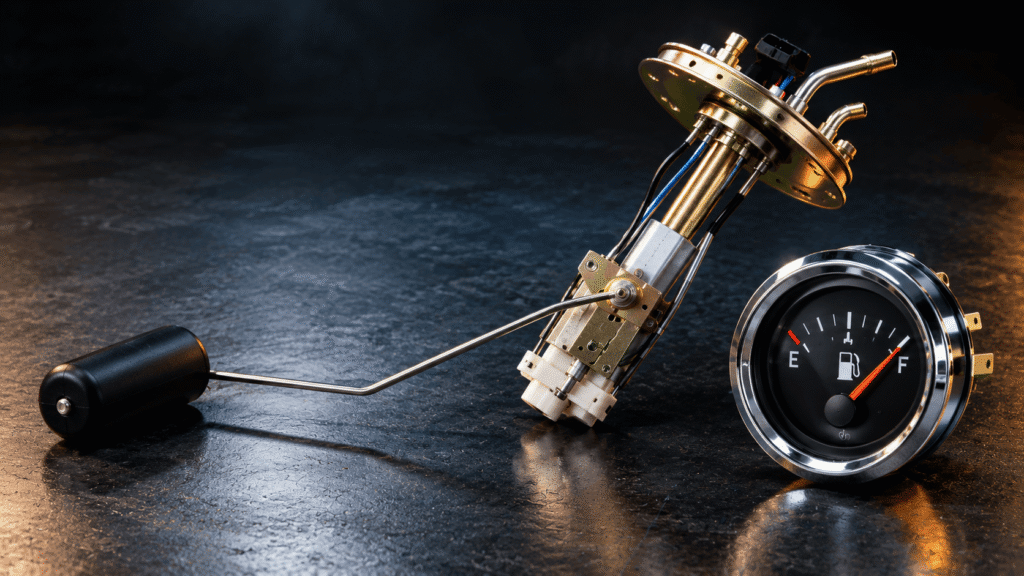
Your fuel gauge says empty. You just filled the tank. Or it says full, and you coast to the side of the road two miles later. Sound familiar?
Picking the best fuel gauge sending unit for classic cars is harder than it looks. Old cars use different ohm ranges, tank depths, and mounting styles. Many listings say “universal,” and that word can hide serious trouble. Buy the wrong one and your gauge will read wrong, no matter how well you install it.
This guide helps you skip that mistake. I compare four popular senders, point out their real drawbacks, and show you how to match a sender to your gauge before you spend a dollar. If your gauge is acting up, start with our guide on why a classic car fuel gauge stops working to make sure the sender is really the problem.
Quick Picks
- Best Overall for Replacing a Failed Sender: Product 2, Dorman 55818 Universal Fuel Level Sending Unit Kit
- Best Budget / Most Adjustable: Product 1, CLLOMAGY marine sender with a cuttable rod
- Best for Fixed-Length Fit and Standard 5-Hole Mounting: Product 3, EMIHO 240-33 ohm sender
- Best Complete Sender and Gauge Kit: Product 4, SIPIDEAUT sender and gauge kit
Table of Contents
Comparison Table
| Image | Product | Detail | Price |
|---|---|---|---|
 | Marine Fuel Sending Unit |
| Check Price on Amazon |
 | Dorman 55818 Universal Fuel Level Sender |
| Check Price on Amazon |
 | 11-Inch Stainless Steel Fuel Level Sender |
| Check Price on Amazon |
 | 6-Inch Fuel Sender and Gauge Kit |
| Check Price on Amazon |
How We Chose These Products
I did not physically test these senders. This guide is based on research: the manufacturer details in each listing, the technical needs of classic car fuel systems, and the common questions buyers ask before replacing a sender.
I looked at five things:
- Ohm range clarity. Does the listing say what the sender outputs?
- Fit flexibility. You can modify the length or select your preferred size.
- Materials. Will the parts hold up around fuel and moisture?
- Installation. Is the mounting style common, and does it include the basics?
- Honest drawbacks. Where does each product fall short for a classic?
I leave out prices and star ratings on purpose, because they change often. Click through to Amazon for current details.
Detailed Reviews
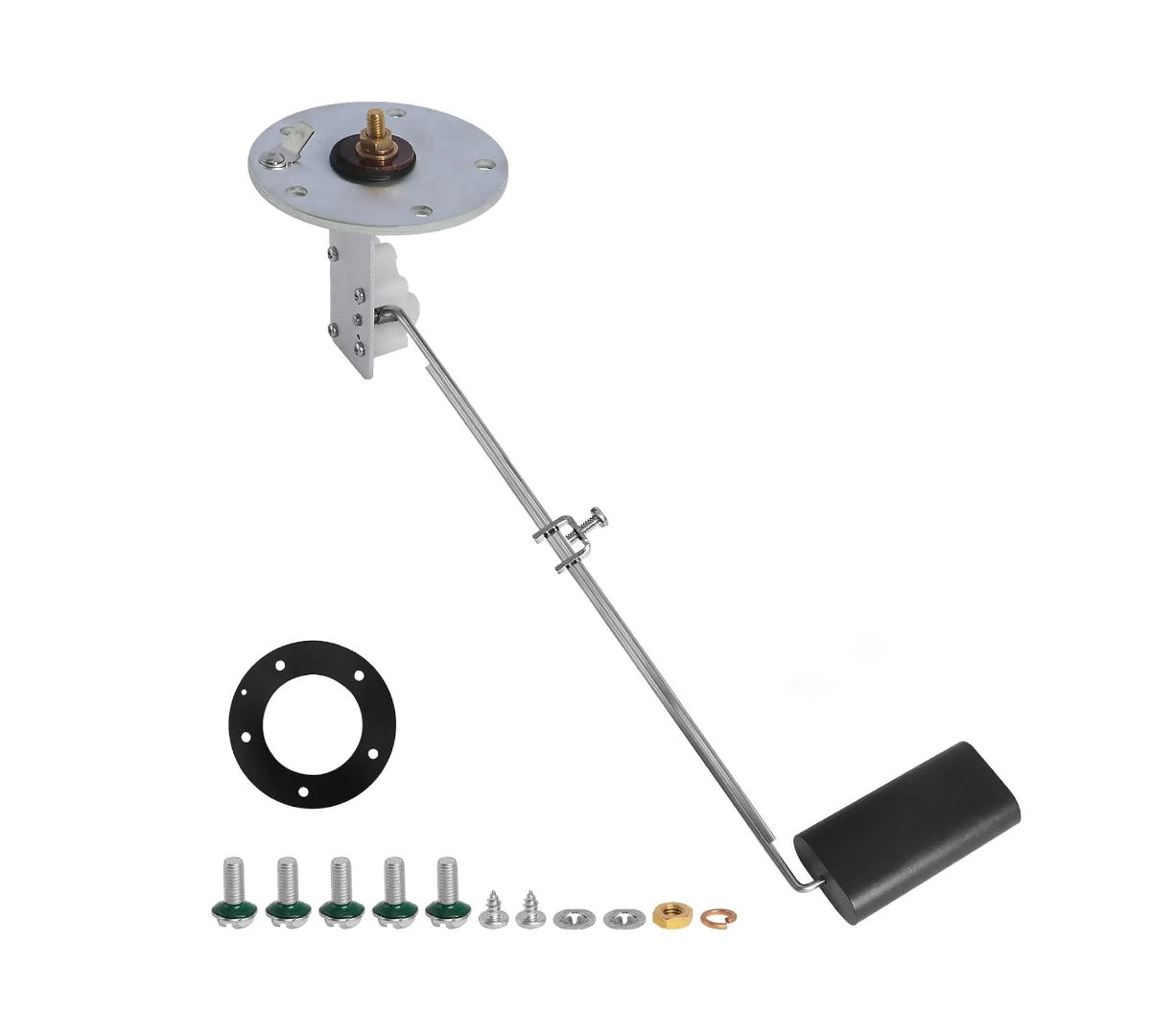
1. Marine Fuel Sending Unit, Boat Fuel Tank Sending Unit for Marine 4-28″ Depth Fits RV Car Truck Tanks 33-240ohms Gas Water Diesel Level Gauge, Cuttable Float Rod Saltwater Marine Fuel Sending Unit
Marine Fuel Sending Unit
- Wide Compatibility: Fits marine, RV, car, and truck fuel tanks.
- Adjustable Depth: Suitable for tank depths from 4 to 28 inches.
- Resistance Range: Compatible with 33–240 ohm fuel gauges.
- Cuttable Float Rod: Adjustable rod for different tank sizes.
- Versatile Use: Designed for gasoline, diesel, and water-level applications as specified by the manufacturer
Among all the options, this sender offers the greatest flexibility for adjustment. The float rod is cuttable, so you trim it to match your tank instead of hoping a fixed length fits. That helps a lot when you are working with a swapped tank or a custom fuel cell.
Why You’ll Like It
- You can cut the rod to fit a wide range of tank depths, which cuts down on returns.
- The listing describes a brass top fitting, stainless screws, and an aluminum alloy base, which suits damp or salty conditions.
- The base can be rotated by loosening a center screw, which helps in tight tanks.
Pros
- Highly adjustable length
- Works with 33 to 240 ohm dash gauges
- Corrosion-resistant materials
- Often the lowest-cost option in this group
Cons
- Built for marine use, not for a specific classic car, so it will not bolt in like an original part.
- Cutting the rod too short or too long causes bad readings, and you cannot uncut it.
Best for: Custom builds, project cars, and tanks where no direct-fit sender exists.
What buyers commonly appreciate: Many buyers mention that it is easy to adjust and install, and that it works well once the length is set correctly.
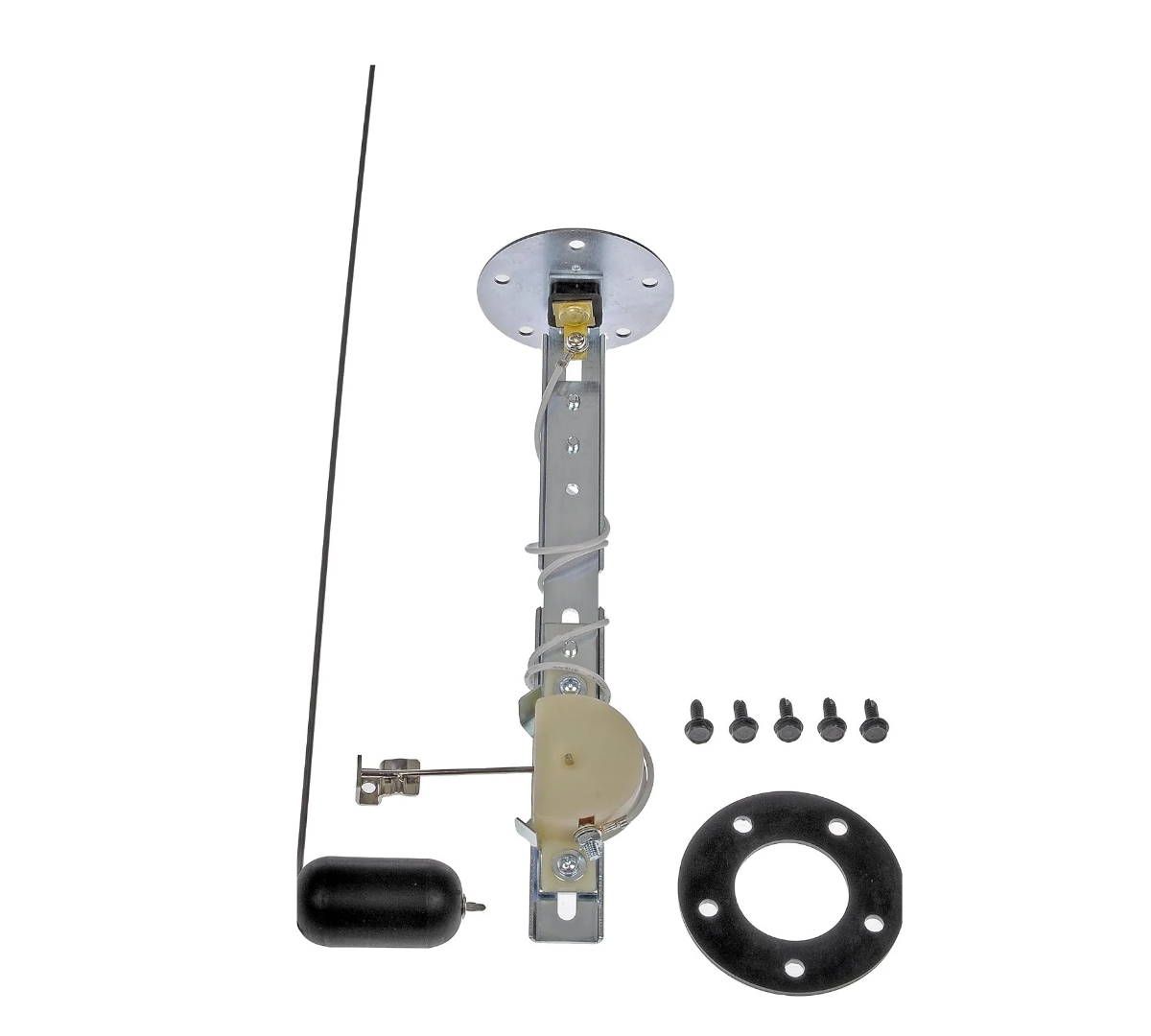
2. Dorman 55818 Adjustable Universal Fuel Level Sender Kit
Dorman 55818 Universal Fuel Level Sender
- Adjustable Design: Fits different fuel tank depths.
- Universal Fit: Suitable for various vehicle applications.
- Fuel Level Monitoring: Helps measure fuel levels in the tank.
- Customizable Length: Adjustable sender design for installation flexibility.
- Replacement Solution: Helps replace a faulty fuel level sender.
If your goal is to replace a worn-out sender with something from a known automotive brand, this is the safest-feeling pick here. The listing gives a clear ohm range: 240 at empty and 33 at full. That is a common range for many aftermarket gauges, so matching is simple.
Why You’ll Like It
- It comes from a US parts brand with a long automotive history.
- The ohm values are stated clearly, which makes gauge matching easier.
- It is aimed at restoring a failed sender instead of replacing the whole system.
Pros
- Clear empty and full ohm values
- Usually costs less than a dealer part for newer vehicles.
- Automotive-focused design
- Good fit for repair-minded owners
Cons
- The 240-33 range will not match gauges built for other ranges.
- Less adjustable than a cuttable rod.
Best for: Owners replacing a failed sender in a system that already uses a 240-33 ohm gauge.
What buyers commonly appreciate: Many buyers say it installs without drama and brings the gauge back to life.
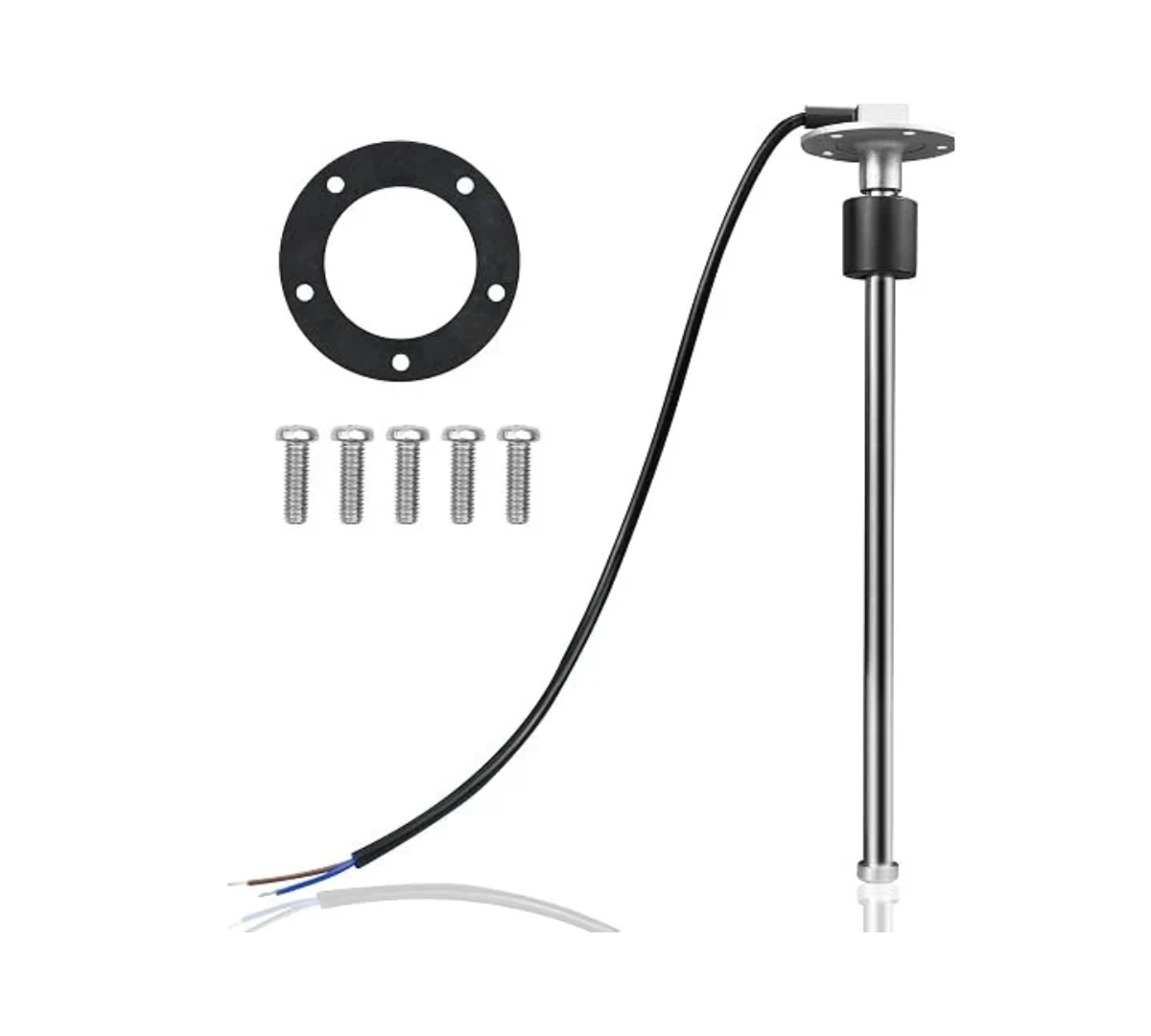
3. 240-33 ohms 11″(275mm) Fuel Level Sending Unit for Marine Boat Truck Car Fuel Water Level Gauge Sensor Stainless Steel Fuel Gas Tank Sender 5 Hole
11-Inch Stainless Steel Fuel Level Sender
- Stainless Steel Build: Durable construction for long-term use.
- 11-Inch Length: Measures 275 mm for compatible fuel tanks.
- 240–33 Ohm Range: Works with compatible fuel level gauges.
- 5-Hole Mounting: Designed for compatible five-hole tank openings.
- Wide Compatibility: Suitable for marine boats, cars, and trucks.
This one suits owners who already have a standard 5-hole opening in the tank. It uses a common pattern and comes in several fixed lengths, so you can pick the one closest to your tank depth. The kit includes screws, a gasket, and wiring instructions.
Why You’ll Like It
- Stainless steel construction is built for long life around fuel.
- Mounting hardware and a gasket come in the box.
- Clear wire colors make hookup easier.
Pros
- 240 to33 ohm output
- Standard 5-hole mounting pattern
- Several length options
- Hardware included
Cons
- Fixed lengths mean no trimming, so measure twice.
- Marine and general-purpose design, not classic-car-specific.
Best for: Tanks with a 5-hole opening, or builders who are cutting a new one.
What buyers commonly appreciate: Many buyers mention that it feels solid and is simple to wire up.
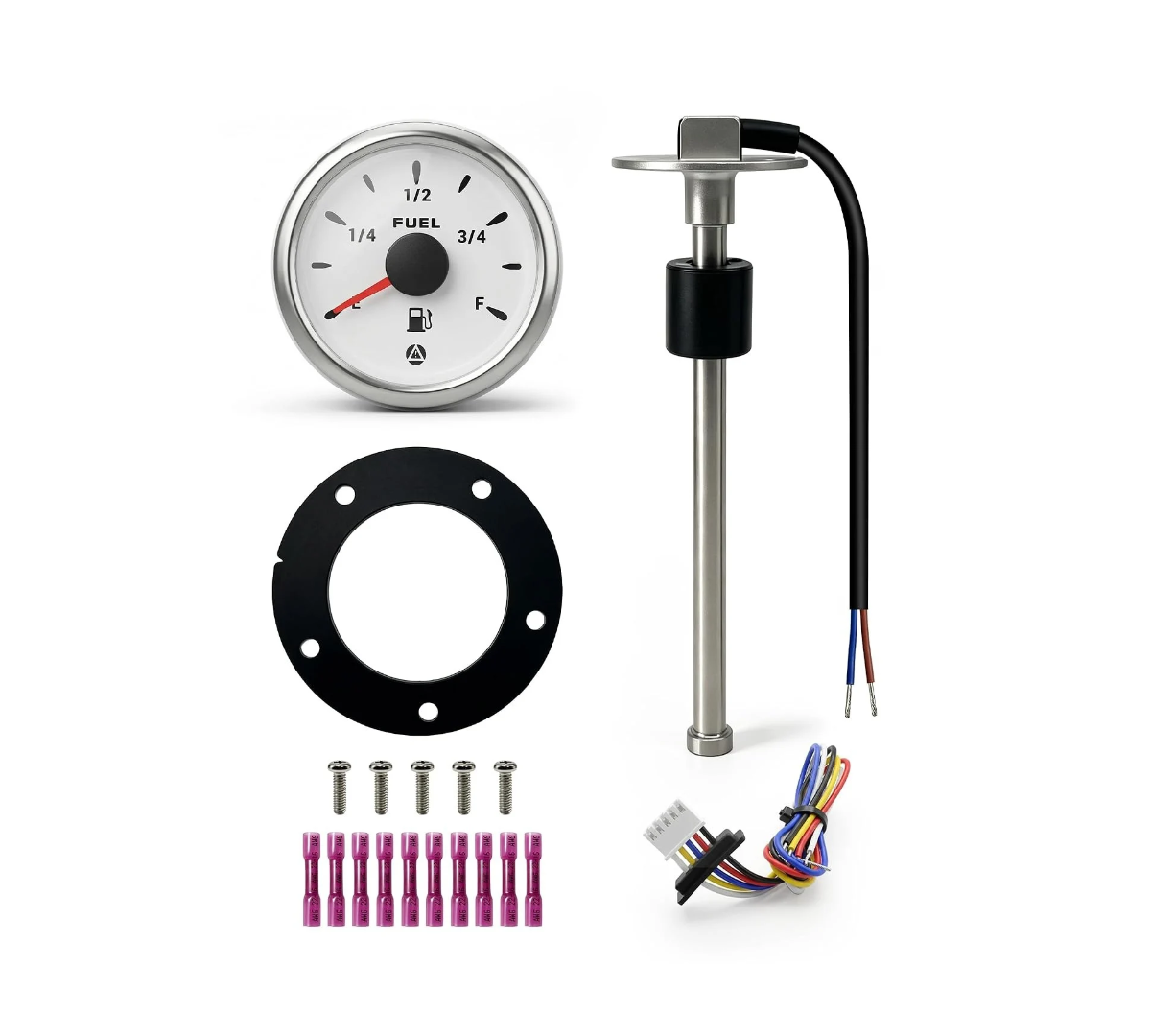
4. 6″ Fuel Sender Unit and Fuel Gauge Kit, Fuel Sending Unit and Gauge Kit
6-Inch Fuel Sender and Gauge Kit
- 6-Inch Sender: Designed for compatible fuel tank depths.
- Gauge Included: Comes with a matching fuel level gauge.
- Fuel Level Monitoring: Helps display the fuel level in the tank.
- Complete Kit: Includes a sending unit and gauge.
- Easy Installation: Designed for convenient installation in compatible setups.
This is the only kit on the list that comes with a compatible gauge. If you are building a custom dash and do not care about original looks, it saves you from matching two separate parts. The gauge has a color-selectable backlight and a stainless steel frame.
Why You’ll Like It
- The sender and gauge are meant to work together, which removes the ohm-matching guesswork.
- The kit includes a gasket, screws, and heat-shrink terminals.
- The listing describes an IP67 waterproof design.
Pros
- Complete system in one box
- Stainless steel exterior on the sender
- Multiple length options in the listing
- Backlight is easy to read at night.
Cons
- The look is modern. It is not suitable for restorations that require original, matching-number components.
- The listing details I reviewed do not state the sender’s ohm range. Confirm it before using the sender with a different gauge.
Best for: Restomods, hot rods, and custom dashboards.
What buyers commonly appreciate: Feedback is still limited. The kit’s appeal is that you get everything you need in one package.
How to Pick the Best Fuel Gauge Sending Unit for Classic Cars
The best fuel gauge sending unit for classic cars is the one that matches your gauge, your tank, and your mounting style. A great part with the wrong ohm range will still give you the wrong reading.
1. Match the ohm range first
A fuel gauge and sender work as a pair. The sender changes its resistance as the float moves, and the gauge reads that resistance. If the two do not speak the same language, the needle lies.
Ranges vary by maker and era. Many aftermarket gauges use 240 ohms empty and 33 full. A lot of older GM vehicles use a 0–90 ohm fuel gauge range. Many pre-1987 Fords use 73 to 10. Some European cars use 10 to 180. Check your factory manual or the gauge itself before you buy.
Pro tip: Look up the original sender part number in your service manual. If you cannot find it, test the old sender with a multimeter on the bench. Our step-by-step guide to testing a fuel sending unit walks you through it.
2. Measure the tank depth
Measure from the mounting surface to the bottom of the tank. Then follow the maker’s advice on how much shorter the rod should be. One listing in this guide suggests staying about half an inch under the tank depth for metal tanks and about an inch for plastic ones.
3. Check the mounting style
Some tanks use a five-hole pattern. Others use a six-hole pattern, a threaded fitting, or a side mount. The five-hole pattern is often called an SAE-style pattern, and groups like SAE International publish standards for the industry. If the sender doesn’t fit your tank opening, you may need an adapter plate or another compatible sending unit.
4. Think about materials and modern fuel
Today’s gasoline often contains ethanol. The U.S. Department of Energy explains the common ethanol blends in detail. Ethanol can be harder on older rubber and some plastics, so check what your float and gasket are made of. Always use a new gasket when you install a sender.
Common Buying Mistakes
- Trusting the word “universal.” It does not mean it fits your car. It only means it can fit many.
- Ignoring the ohm range. This is the number one cause of wrong readings after a swap.
- Cutting the rod too short. Your gauge will never read full. Cut longer first, then trim in small steps.
- Reusing the old gasket. A leaky seal near a fuel tank is a fire risk.
- Skipping the ground. A poor ground makes a good sender act broken. Clean the contact points and the tank straps.
- Blaming the sender too fast. On many older cars, an instrument voltage stabiliser or regulator also affects the gauge. Read our guide to instrument voltage regulators if both your fuel and temperature gauges act strange.
Budget vs. Premium
A low-cost sender can work well if it matches your gauge and you install it carefully. The extra cost of a premium or brand-specific part usually buys you easier fitment, clearer specs, and sometimes better calibration to a certain gauge.
If you want an original look or a direct fit for a popular model, a specialist classic parts supplier is often worth the higher cost. If you are building a custom car or fixing a daily driver, a universal sender like the ones in this guide can make sense. Browse our favorite classic car accessories for other upgrades that make older cars easier to live with.
Safety and Maintenance Tips
Warning: Gasoline vapor is more dangerous than liquid fuel. Work outside or in a well-ventilated space, disconnect the battery, keep sparks and flames away, and keep a fire extinguisher nearby. See OSHA’s flammable liquids guidance and the National Fire Protection Association for fire safety basics.
- Work with the tank as low as you safely can.
- Have a clean container ready for drained fuel, and dispose of old gasoline properly. The EPA explains household hazardous waste rules.
- Test the sending unit with a multimeter before installation to make sure it works correctly.
- Clean the ground points whenever the tank is out. Our fuel tank maintenance guide covers what else to check.
- Check for open safety recalls and fuel system notices on your vehicle through NHTSA.
Even with a perfect sender, treat your gauge as a guide. Track your real mileage between fill-ups with a free tool like FuelEconomy.gov, and use your trip odometer as a backup.
Who Should Buy Which Product?
- Replacing a worn sender in a 240-33 system: Product 2, Dorman 55818.
- Custom tank or unusual depth: Product 1, because you can cut the rod to fit.
- Tank with a 5-hole opening: Product 3, EMIHO.
- Restomod with a new dash: Product 4, the sender and gauge kit.
- Numbers-matching restoration: None of these four. Look for a specialist supplier of period-correct senders, and check owner clubs and classic car communities such as Hagerty and Hemmings for model-specific advice.
Frequently Asked Questions
What ohm range does my classic car need?
It depends on the make and year. Many aftermarket gauges use 240 to 33 ohms, many older GM vehicles use 0 to 90, and many pre-1987 Fords use 73 to 10. Check your factory service manual or the gauge’s markings.
Can I use a marine sender in a classic car?
Often yes, if the ohm range, length, and mounting pattern match, and the listing says it is suitable for gasoline. Marine senders are designed for tough conditions, but they are not made to look original.
Why does my gauge still read wrong after a new sender?
The most common reasons are a mismatched ohm range, a bad ground, a wrong rod length, or a failing instrument voltage stabiliser. Check these in that order before replacing parts again.
How do I test a fuel sending unit?
Remove it safely, connect a multimeter across the terminal and body, and move the float arm slowly from empty to full. The resistance should change smoothly with no jumps or dropouts.
How long should the sender rod be?
Measure the tank depth, then choose a length slightly shorter, following the maker’s guidance. Cut or choose longer first if you are unsure, because you can always trim more.
Should I replace the gasket?
Yes. A fresh gasket helps prevent leaks around the opening. Never reuse a hardened or damaged one.
Is it safe to replace a sender myself?
Many owners do it, but fuel vapor is dangerous. Disconnect the battery, work outdoors, avoid ignition sources, and keep a fire extinguisher close. If you are unsure, ask a qualified mechanic.
Final Verdict
The best fuel gauge sending unit for classic cars is the one that matches your gauge’s ohm range, fits your tank, and suits how you use the car. For a straightforward repair, the Dorman 55818 is the simplest starting point. For custom tanks, the CLLOMAGY unit gives you the most flexibility. The EMIHO fits standard 5-hole openings, and the SIPIDEAUT kit makes sense if you are also upgrading the gauge.
Check your gauge’s ohm range first, measure your tank, and then compare the details on Amazon. Wrong parts cost more than the right ones, even when the right ones cost more up front. If you are still stuck, our classic car wiring tips, our guide to choosing a multimeter for car diagnostics, and our ethanol fuel and classic cars and classic car gauge kits pages can help you narrow things down.