Introduction
The first time you’re staring at a parts counter shelf with three price tiers of the “same” spark plug, it’s tempting to just grab the most expensive one and assume you’re doing your engine a favor. Sometimes that’s true. Sometimes it’s the wrong call entirely — I’ve seen plenty of people upgrade a plug that had no business being upgraded, and end up with worse performance than the plug it replaced.
The difference between copper, platinum, and iridium spark plugs comes down to one thing: the metal at the tip of the electrode, and how that metal’s properties trade off conductivity against durability. Once you understand that trade-off, picking the right one for your car stops being a guessing game.
The Quick Answer
| Copper | Platinum | Iridium | |
|---|---|---|---|
| Electrode material | Copper core, nickel-alloy tip | Platinum disc on center (single) or both electrodes (double) | Ultra-fine iridium wire tip |
| Conductivity | Best of the three | Slightly lower than copper | Slightly lower than copper |
| Hardness / durability | Softest, wears fastest | Much harder than copper | Hardest — roughly 6x harder than platinum |
| Melting point | Lowest | Higher than copper | Highest of the three |
| Typical lifespan | 10,000–30,000 miles | 50,000–90,000 miles | 60,000–120,000+ miles |
| Price per plug | Lowest | Mid-range | Highest |
| Best suited for | High-performance/older engines built around them, budget replacement | Everyday daily drivers wanting fewer replacements | Modern engines, factory-fit on most new vehicles |
For the full mileage breakdown and what actually shortens or extends each type’s lifespan in the real world, see our complete guide to spark plug lifespan by type.
Copper Spark Plugs: The Original, Still Relevant
Despite the name, a copper spark plug isn’t solid copper at the tip — it’s a copper core (for heat and electrical conductivity) wrapped in a nickel-alloy shell that actually does the firing. Copper is the best conductor of the three materials by a clear margin, which is why copper plugs still show up in performance and racing applications where raw spark strength matters more than longevity.
The trade-off is that nickel alloy is soft. It erodes fast under repeated sparking, which is why copper plugs have the shortest service life of the group. That’s not a flaw so much as a design choice: copper plugs are inexpensive, they deliver a strong spark right out of the box, and for an engine actually designed around them — older vehicles, certain turbocharged or high-compression builds — they’re not an inferior choice, they’re the correct one.
Choose copper if: your vehicle was originally specified for copper plugs, you’re running a performance build that benefits from maximum conductivity, or you’d rather replace an inexpensive part more often than pay a premium for longevity you don’t need.
Platinum Spark Plugs: The Everyday Upgrade
Platinum plugs take that same basic copper-core design and fuse a small platinum disc onto the center electrode. Platinum is considerably harder than the nickel alloy used on copper plugs, so it holds its shape and its gap far longer — this is the entire reason platinum plugs became the mainstream factory standard through the 2000s.
There’s a detail here that a lot of buying guides skip: platinum plugs come in single and double varieties, and the difference actually matters. Single platinum has the platinum disc only on the center electrode. Double platinum adds a second disc to the ground electrode as well — and that second disc isn’t just a bonus, it’s a requirement for certain older “waste spark” ignition systems, where the plug fires in both directions across the gap. Put a single platinum plug in an engine that calls for double, and the exposed ground electrode wears out far faster than expected, because it’s taking damage the design never accounted for.
Platinum does give up a small amount of raw conductivity compared to copper, which is a fair trade for most daily driving — the difference isn’t something you’ll feel behind the wheel, but the extended interval between replacements is very real.
Choose platinum if: you drive a mainstream daily driver from the 2000s or later and want a meaningful jump in service life over copper without the premium price of iridium — just confirm single vs. double matches your ignition system first.
Iridium Spark Plugs: The Current Standard
Iridium takes the same idea platinum uses — a harder metal at the firing tip — and pushes it much further. Iridium is roughly six times harder and eight times stronger than platinum, with a melting point high enough to handle sustained high-performance combustion without breaking down.
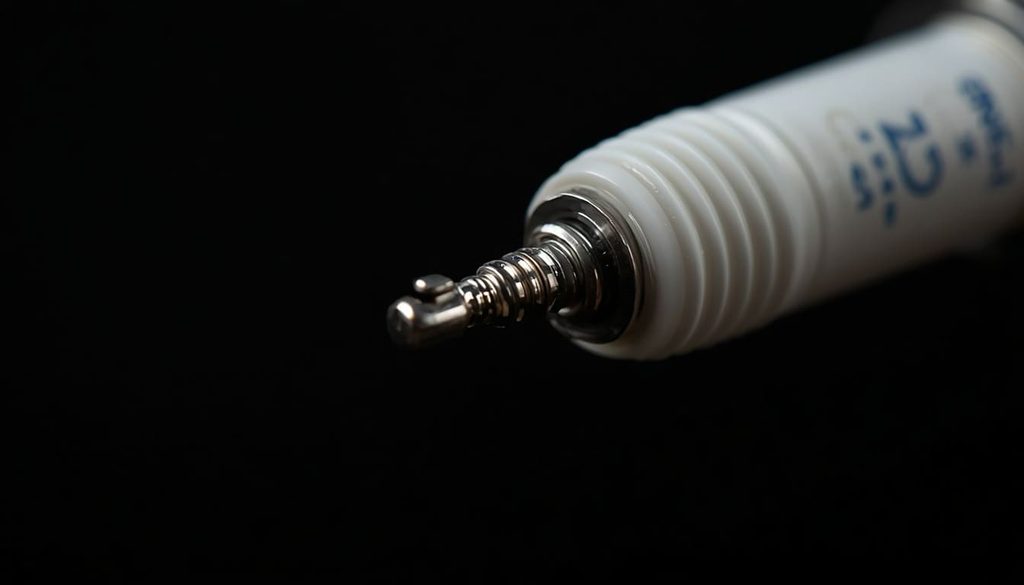
What that hardness actually buys you is more interesting than the raw numbers suggest: because iridium can hold its shape at a much smaller size, manufacturers can machine the center electrode down to a genuinely fine wire — often less than a millimeter across, compared to the thicker tip on copper or platinum plugs. A finer tip needs less voltage to fire, and a more concentrated spark ignites the air-fuel mixture more completely. That’s the real reason iridium plugs are associated with smoother idle and slightly better efficiency, not just longevity — the spark itself is doing a better job, not only lasting longer while doing the same job.
This is also why iridium is now the factory-standard fitment on the majority of new vehicles rolling off the line — manufacturers get both the longer service interval and a small efficiency gain in one part.
Choose iridium if: your vehicle came with iridium from the factory (check before downgrading), you want the longest realistic interval between replacements, or you’re upgrading an older copper- or platinum-spec engine and want the best available option — just confirm the correct heat range and design for your engine rather than assuming any iridium plug is interchangeable.
Can You Upgrade From Copper to Platinum or Iridium?
Generally, yes — if your engine currently runs copper plugs, moving up to platinum or iridium is usually a safe upgrade that buys you a longer interval and, with iridium, a slightly more efficient spark. Engines aren’t picky about accepting a harder, longer-lasting electrode material.
The exception is ignition system design, not material. If your vehicle uses a waste-spark ignition system that calls for double platinum, dropping in a single platinum or a standard iridium plug not specifically designed for that firing pattern can wear out the ground electrode well ahead of schedule. This is less about “better vs. worse” material and more about matching the plug’s design to how your ignition system actually fires. When in doubt, cross-reference the exact part number for your engine rather than shopping by material alone — our guide to reading the NGK spark plug catalogue walks through how to do that.
Going the other direction — downgrading a factory iridium-spec engine to copper — isn’t dangerous, but you’ll give up most of the lifespan advantage the engine was designed around, and you’ll be back at the parts counter far sooner than expected.
Does the Material Actually Change How the Car Feels to Drive?
For most daily driving, no — you won’t feel a dramatic difference switching between correctly-specified copper, platinum, or iridium plugs in good condition. Where the material shows up isn’t in day-one performance, it’s in how gracefully the plug ages. A copper plug delivers a strong spark on day one and a noticeably weaker one as it erodes over just a few thousand miles. An iridium plug’s fine tip means it degrades far more slowly, so the “day one” performance sticks around for tens of thousands of miles longer. If you’ve ever wondered why a car with worn-out plugs feels sluggish on acceleration, that gradual decline — not a sudden failure — is usually what’s actually happening. Our guide on how spark plugs affect acceleration goes deeper into that specific symptom if that’s what brought you here.
Which One Should You Actually Buy?
If you’re replacing plugs on a normal daily driver and your car came with platinum or iridium from the factory, stick with whichever your engine was designed for — matching the original spec is almost always the right call. If your vehicle came with copper and you’re tired of frequent replacements, upgrading to platinum or iridium is a reasonable and common move, provided you’ve confirmed the correct part number, gap, and heat range for your engine rather than picking by material name alone. Getting that gap right at install time matters just as much as the material choice — see our guide to gapping spark plugs with a feeler gauge before you install anything.
If you’re chasing maximum interval length and don’t want to think about spark plugs again for years, iridium is the clear choice. If you’re maintaining an older vehicle or performance build that was genuinely designed around copper’s stronger conductivity, don’t feel pressured to “upgrade” away from what the engineer originally specified — it’s not an inferior plug, it’s the correct one for that application.
FAQs
Is iridium always better than platinum, no matter the car?
Not universally — iridium wins on longevity and spark efficiency, but “better” only matters if the engine is designed to use it correctly. A correctly-specified platinum plug will always outperform an incorrectly-specified iridium plug.
Can I mix spark plug types across cylinders in the same engine?
It’s not recommended. Even though it might run, mixing materials means uneven wear rates and firing characteristics across cylinders, which can create inconsistent combustion and make future diagnosis harder.
Do iridium spark plugs really improve fuel economy?
Only meaningfully if they’re replacing plugs that were already worn. A worn plug of any material creates an incomplete, inefficient burn — swapping to fresh iridium restores efficiency, but it won’t out-perform a fresh platinum or copper plug of the same age by a noticeable margin.
Is it worth paying extra for iridium on an older car with high mileage already?
Usually yes, if the rest of the ignition system is healthy — you’ll get the longest possible interval before touching the plugs again. If the engine has other issues causing fouling (like oil consumption), no plug material will outlast that underlying problem.
Why do some platinum plugs cost almost as much as iridium?
Double platinum plugs, which place precious metal on both electrodes for waste-spark ignition systems, cost more to manufacture than single platinum — sometimes closing the price gap with entry-level iridium options.
The Bottom Line
Copper, platinum, and iridium aren’t a simple “good, better, best” ladder — they’re a trade-off between conductivity and durability, and the right choice depends on what your specific engine was built around. Copper still earns its place in performance and older applications. Platinum is the reliable, no-drama middle ground for most daily drivers. Iridium buys you the longest interval and a slightly more efficient spark, which is exactly why it’s become the factory default on most new vehicles today. Match the plug to your engine’s actual specification, not just the price tag, and any of the three will do its job well.