

Introduction
If you’re asking, can I switch from synthetic oil to conventional oil, you’re not alone. Many drivers debate this change, unsure about engine compatibility, performance differences, or long-term impact. The good news: switching is safe in many situations—but it depends on your vehicle, driving habits, and manufacturer recommendations.
This guide breaks down everything you need to know. You’ll get a clear comparison between synthetic and conventional oils, learn when switching makes sense, and discover practical steps to do it safely. We also cover high-mileage considerations, maintenance tips, and real-world scenarios so you can make an informed decision and keep your engine running smoothly and efficiently.
Table of Contents
Synthetic vs Conventional Oil: What’s the Real Difference?
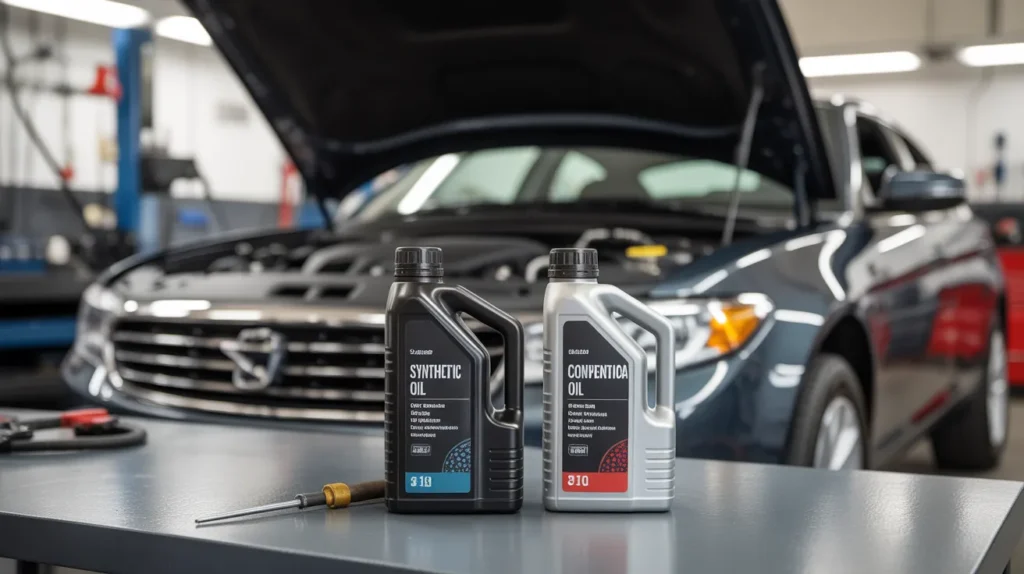
When comparing synthetic oil vs. conventional oil, the real difference comes down to how each oil is made and how it performs inside your engine.
Synthetic oil is engineered in a laboratory using carefully controlled chemical processes. Its molecules are uniform in size and structure, which improves flow and protection. The oil composition and additives are precisely blended to reduce friction, resist oxidation, and control sludge buildup. Conventional oil, on the other hand, is processed by refining crude oil. Although impurities are removed during refining, its molecular structure remains uneven.
This difference between synthetic and regular oil directly affects engine lubrication performance. Synthetic oil provides stronger protection under extreme heat, heavy loads, and cold starts. It also offers superior viscosity stability, meaning it maintains the right thickness across temperature changes. Conventional oil can thin out faster in high heat and may break down more quickly over time.
In short, while both oils protect your engine, synthetic oil delivers more consistent performance and longer-lasting protection in demanding conditions.
Is It Safe to Switch Back to Conventional Oil?

In most modern cars, switching from synthetic to regular oil is generally safe — as long as the oil matches your engine’s required specifications. The most important factor is engine compatibility. If your vehicle manufacturer approves conventional oil with the correct viscosity and API rating, the engine will continue to run normally.
What matters more than oil type is following the manufacturer’s recommendations. Always check your owner’s manual for the correct grade and certification. If the conventional oil meets those standards, it will still provide proper lubrication and protection for everyday driving. For standard commuting and moderate climates, the switch usually does not create mechanical issues.
When It’s NOT Recommended
However, there are situations where switching may not be ideal. High-mileage engine concerns should be considered, especially if the engine has used synthetic oil for years. Synthetic oil offers better heat resistance and cleaning ability, which older engines often benefit from.
Vehicles used for towing, performance driving, or extreme temperatures also rely on the synthetic oil’s stronger stability.
As for the common oil seal leakage myth, synthetic oil does not cause leaks — it simply cleans buildup that may expose already worn seals. Switching back to conventional oil will not repair damaged seals; it only reduces cleaning action.
In short, safety depends on your engine’s condition and usage, not just the oil label.
What Happens If You Switch? (Engine Impact Explained)
Short-Term Effects After Switching
If you switch from synthetic to conventional oil, major changes usually don’t happen immediately. Most engines will continue running smoothly, especially if the oil meets the correct viscosity grade. However, you might notice slightly weaker cold start protection in colder weather. Synthetic oil flows faster at low temperatures, so conventional oil may take a bit longer to circulate during startup.
There may also be a minor fuel efficiency impact, since synthetic oil generally reduces internal friction more effectively. In real-world driving, though, the difference is often small and hard to measure.
Overall, short-term effects are typically mild and manageable.
Long-Term Mechanical Impact
Over longer service intervals, differences become more noticeable. Conventional oil tends to experience faster oil breakdown, especially under high heat, towing, or stop-and-go driving. As protection weakens, the risk of oil sludge formation increases if oil changes are delayed.
You may also observe slightly higher oil consumption, since conventional oil can thin out and evaporate more quickly over time.
Still, switching oils does not automatically harm a healthy engine. Proper maintenance and timely oil changes have a far greater impact on engine life than the oil label itself.
When Should You Switch — And When Should You Not?
When Switching Makes Sense
Switching can make sense if your car is used for regular daily driving in a moderate climate. For short commutes, light highway use, and routine city traffic, conventional oil often provides sufficient protection. If lowering maintenance costs is important, moving away from full synthetic may reduce expenses without harming a healthy engine.
A synthetic blend option can also be a smart compromise. It offers improved protection compared to standard oil while staying more affordable than full synthetics. In areas without extreme weather conditions, most well-maintained engines handle the switch without noticeable performance changes.
When You Should NOT Switch
Be more cautious with older engines, especially those that depend on synthetic oil’s stronger cleaning and heat resistance. The same applies to high-mileage cars, where internal wear may require more stable lubrication.
Vehicles exposed to extreme weather conditions — very hot summers or freezing winters — benefit from synthetic oil’s superior temperature stability. Engines used for towing or heavy driving also face higher stress and are better protected with synthetic oil.
Quick Decision Checklist
✔ Switching is likely safe if:
- You drive normally in mild climates.
- Your engine is healthy and has low mileage.
- You follow the correct viscosity and service intervals.
✖ Avoid switching if:
- You own older engines with wear concerns
- You drive high-mileage cars with heavy use
- You tow, haul, or drive in extreme temperatures.
Choose based on how your engine works every day — not just the oil price.
How to Properly Switch Oils (Step-by-Step)
Step 1: Check Your Owner’s Manual
Always start by following your owner’s manual. It specifies the recommended oil viscosity, SAE rating, and API certification for your engine. Using oil that meets these standards ensures proper lubrication and prevents compatibility issues. Don’t rely on marketing labels—your manual provides the specifications your engine actually needs.
Step 2: Decide If You Need an Engine Flush
An engine flush is helpful if the engine has significant deposits or sludge, but it’s not always necessary. For engines that have been well-maintained, a flush may be skipped. Overusing flushes can dislodge debris and create problems. Only use it when switching from neglected oil or excessive buildup.
Step 3: Replace the Oil Filter
Always replace the oil filter when changing oil. The filter traps contaminants, and using an old one reduces protection. A new filter keeps the oil clean, supports proper lubrication, and helps extend engine life. Skipping this step can lead to increased wear and reduced performance.
Step 4: Monitor After the Switch
After switching, regularly check the oil level and watch for leaks. Follow the recommended oil change interval and observe engine performance. Minor variations in oil consumption can happen initially, but levels should stabilize quickly. Investigate promptly if the engine sounds unusual or oil drops rapidly.
With these steps, switching oils is simple and safe. Using the correct oil and maintaining regular service ensures your engine stays protected and runs efficiently.
Conclusion
Yes, you can switch from synthetic oil to conventional oil in many vehicles, but it depends on engine compatibility and manufacturer recommendations. For most healthy engines with proper maintenance, switching is safe for everyday driving. However, older engines, high-mileage cars, or vehicles operating in extreme weather or under heavy towing may perform better with synthetic or synthetic-blend oil.
Following the correct oil change interval, replacing the oil filter regularly, and using oil that meets your engine’s SAE rating and API certification matter more than the type of oil does. Always consult your owner’s manual before making changes.
In short, can I switch from synthetic oil to conventional oil? Yes—when it fits your engine’s needs. Using quality oil and sticking to routine maintenance keeps your engine running smoothly for years to come.
FAQs
Can I switch from synthetic oil to conventional oil without damaging my engine?
Yes, switching is generally safe if your engine is compatible and meets manufacturer recommendations. Issues only arise if the oil doesn’t match the required viscosity or API certification.
Will switching oils affect my oil change interval?
Conventional oil often needs more frequent changes than synthetic oil. Always follow your owner’s manual and recommended oil change interval to maintain optimal engine protection.
Is switching a good idea for high-mileage engines?
High-mileage engines may benefit from synthetic oil’s superior stability and cleaning properties. Using a synthetic blend option can be a good compromise for extra protection while lowering costs.
Do I need an engine flush when switching from synthetic to conventional oil?
An engine flush isn’t always necessary. It can help if your engine has heavy deposits, but regular oil changes usually keep the system clean without additional treatments.
Will fuel efficiency change after switching?
You might notice a slight difference, but it’s typically minimal. Synthetic oils reduce friction slightly, so conventional oil could affect fuel efficiency under some conditions, though most drivers won’t see a major impact.
If you want to find the best spark plugs for the Hyundai Elantra and learn which plugs deliver better performance and fuel efficiency, this article has all the details. It covers recommended spark plugs, compatibility, and installation tips so you can make the right choice for your vehicle.
If you are looking to explore the NGK spark plugs catalogue and discover which NGK plugs are best suited for your engine, this article will help. It includes information on different models, specifications, and options for various vehicles, making it easier to select the right spark plugs for optimal performance.

