
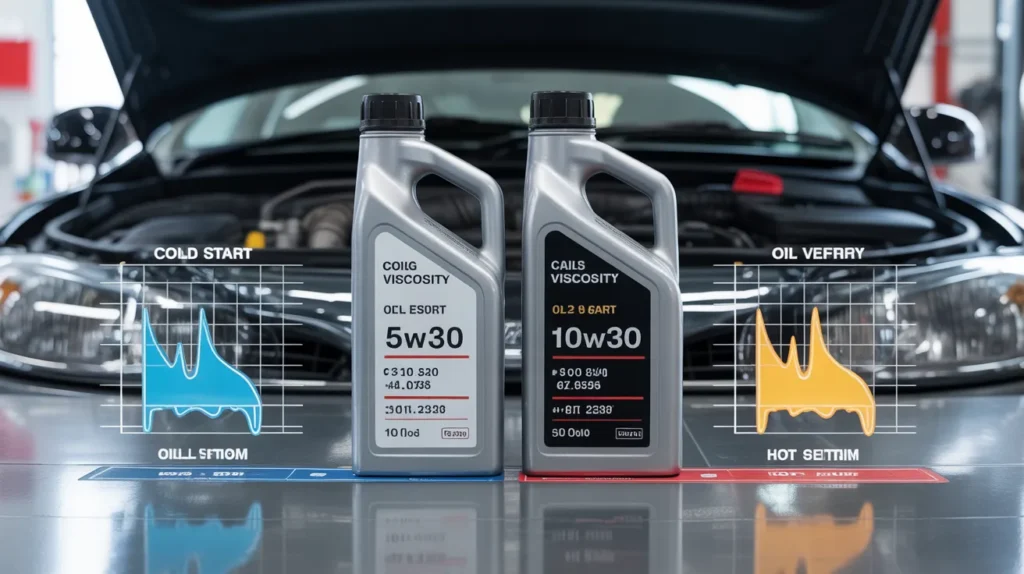
Introduction
Choosing the right engine oil can be confusing, especially when you see labels like 5W30 and 10W30. If you’ve ever wondered about the difference between 5W30 and 10W30 oil, you’re not alone. Many car owners struggle to figure out which oil works best for their engine, climate, and driving habits.
Using the wrong oil can affect engine performance, reduce fuel efficiency, and even shorten your engine’s lifespan. This is why it’s essential to make a well-informed decision.
In this guide, we’ll break down the difference between 5W30 and 10W30 oil in simple, easy-to-understand terms. You’ll learn how each oil performs in cold and hot weather, which is better for new or high-mileage engines, and practical tips for selecting the right oil for your car. By the end, you’ll have expert advice to choose the best oil for your engine confidently.
Table of Contents
What Do 5W30 and 10W30 Mean?
Engine oil viscosity simply describes how thick or thin an oil is and how smoothly it flows through your engine. To standardize this, manufacturers use SAE oil grades, which show how oil behaves in both cold and hot temperatures.
So, what does 5W30 mean? The “5W” indicates how easily the oil flows in cold weather, with “W” standing for winter. A lower number means the oil stays thinner during cold starts, helping the engine lubricate faster. The “30” refers to the oil’s thickness once the engine reaches normal operating temperature.
Now, what does 10W30 mean? It works the same way but is slightly thicker during cold starts due to the higher “10W” rating. Once the engine warms up, both oils provide similar protection.
Understanding engine oil viscosity helps you choose the right oil for smoother performance and longer engine life.
Difference Between 5W30 and 10W30 Oil (Detailed Comparison)
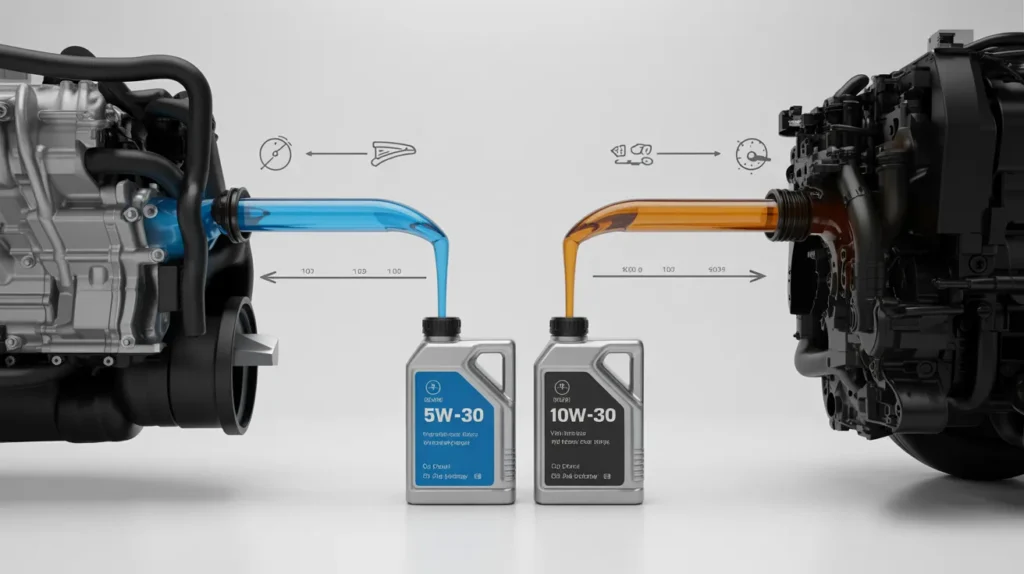
Understanding the difference between 5W30 and 10W30 oil mainly depends on how each oil performs in different temperature conditions. Both are multi-grade oils designed for year-round engine protection, but their behavior varies slightly, especially during cold starts. Here’s a clear 5W30 vs 10W30 comparison.
Cold Start Performance
5W30 flows more easily during cold starts. The lower “5W” rating allows the oil to reach critical engine parts faster, reducing initial wear. In a 5W30 vs 10W30 viscosity comparison, 10W30 is thicker when cold, which may slow lubrication in colder climates.
High-Temperature Thickness
After the engine warms up, both oils deliver nearly identical performance. Since both carry a “30” rating, they maintain nearly the same thickness and protection in hot conditions.
Fuel Efficiency
5W30 generally offers slightly better fuel efficiency because it flows more freely, helping reduce engine resistance—especially in cooler environments.
Engine Protection
Both oils provide reliable engine protection. However, 10W30 may offer a minor advantage in consistently warm climates due to its slightly thicker cold-start viscosity.
5W30 vs 10W30 Comparison Table
| Feature | 5W30 | 10W30 |
|---|---|---|
| Cold Temperature Flow | Better | Slightly thicker |
| Hot Temperature Protection | Similar | Similar |
| Fuel Efficiency | Slightly better | Slightly lower |
| Best Climate | Cold to moderate | Warm to hot |
Which Is Better for Your Car: 5W30 or 10W30?
Deciding which is better, 5W30 or 10W30, depends on your engine type, driving habits, and typical weather conditions. Both oils offer reliable protection, but each suits different situations.
For newer vehicles, 5W30 is often the preferred choice because modern engines have tighter internal clearances and require oil that flows quickly. It’s widely considered the best oil for petrol cars that focus on fuel efficiency and smooth cold starts. On the other hand, older or high-mileage engines may benefit from slightly thicker oil. In such cases, 10W30 can be a practical option and is often seen as the best oil for old engines, especially in warmer climates.
Always follow your owner’s manual when selecting engine oil. Manufacturers design and test engines using specific oil grades, and sticking to their recommendation helps protect performance and warranties.
Driving habits also play a role. Frequent short trips and cold starts usually favor 5W30, while long highway drives or consistently hot conditions may allow 10W30 to perform just as effectively.
5W30 vs 10W30 in Hot and Cold Weather Conditions
Weather greatly affects how engine oil performs, so choosing the right grade can make driving smoother and protect your engine. For colder conditions, 5W30 is often considered the best oil for cold weather because it flows quickly at low temperatures. During a 5W30 cold start, the oil circulates faster through engine components, reducing wear and making it easier for your engine to start on chilly mornings.
Conversely, 10W30 works well in hot environments. Many drivers see it as the best oil for a hot climate because it remains slightly thicker as temperatures rise, ensuring stable lubrication even under intense heat or heavy loads.
If your region experiences extreme seasonal temperature changes, always follow your vehicle manufacturer’s recommendations. In some cases, switching oil grades between seasons (if approved) can help maintain smooth winter starts and strong summer engine protection.
Can You Use 10W30 Instead of 5W30?
Many drivers ask, can I use 10W30 instead of 5W30? The answer is sometimes, but it depends on your engine type and local climate. In older vehicles or consistently warm environments, switching to 10W30 may work without immediate issues. In such cases, many mechanics consider 10W30 safe if the manufacturer allows multiple viscosity options.
Modern engines, however, are built with tighter internal tolerances and often need thinner oil for proper flow. Using a thicker oil than recommended can cause slower lubrication during cold starts, reduced fuel efficiency, and increased engine wear. These are common wrong engine oil effects that may not be noticeable right away, but can shorten engine life over time.
Always follow your manufacturer’s recommendations. Automakers test specific oil grades to ensure engine performance, emissions compliance, and warranty protection. Using an unapproved oil may reduce long-term reliability and, in some cases, void your warranty. When unsure, sticking to the recommended viscosity is the safest choice.
Conclusion
Understanding the difference between 5W30 and 10W30 oil comes down to how each performs in different temperatures, engine designs, and driving conditions. Both grades provide reliable lubrication and protection, but 5W30 generally works best for colder climates and newer engines that require faster oil flow. Meanwhile, 10W30 can be a solid choice for older engines or vehicles running in consistently warm environments.
The safest approach is to follow your vehicle manufacturer’s recommendations first. Then, consider your local climate and driving habits—whether you frequently take short trips, drive long highways, or carry heavy loads. Choosing the right oil viscosity ensures smoother performance, better fuel efficiency, reduced engine wear, and a longer engine lifespan.
FAQs
1. What’s the main difference between 5W30 and 10W30?
5W30 flows faster during cold starts, while 10W30 is slightly thicker. Both oils protect your engine effectively, as long as you follow the manufacturer’s recommended oil viscosity.
2. Can using the wrong oil viscosity damage my engine?
Yes. Using the wrong engine oil for cars can reduce lubrication, increase wear, lower fuel efficiency, and, over time, may shorten engine life. Always stick to the recommended viscosity.
3. Which oil is better for older engines?
10W30 is often preferred for high-mileage or older engines, especially in warm climates. It provides slightly thicker lubrication, but you should always check your manufacturer’s guidelines before switching.
4. Does 5W30 improve fuel economy?
Yes. 5W30 flows more easily, especially during cold starts, reducing engine resistance and helping improve fuel efficiency in both city and highway driving.
5. Can I switch between 5W30 and 10W30?
Only if both viscosities are approved by your vehicle manufacturer. Using the correct oil ensures proper lubrication, engine protection, and maintains warranty compliance.
Looking for the best 5W30 fully synthetic engine oil for your car? This guide breaks down the top-rated oils, their benefits, and what makes them ideal for cold starts, fuel efficiency, and engine protection. If you want to choose the right 5W30 oil for your vehicle and ensure smooth performance, check out this article now.
Do you drive an older or high-mileage car? Choosing the right motor oil is crucial for engine longevity and performance. This article highlights the best motor oils for high-mileage vehicles, their key features, and how they help reduce wear and maintain fuel efficiency. If you want to keep your high-mileage engine running smoothly, read this guide today.

