
Introduction
Have you noticed a strange knocking sound right after an oil change? Engine knocking after oil change can be alarming, making many drivers wonder whether it’s just a minor issue or a sign of serious engine damage.
This problem usually occurs due to low oil levels, incorrect oil viscosity, or a loose oil filter. Understanding whether the noise is temporary or a warning of bigger engine issues can save you time, money, and stress.
In this guide, we’ll break down the main causes of engine knocking after an oil change and show you practical, step-by-step fixes. You’ll learn how to check your oil, identify warning signs, and know when it’s time for a mechanic inspection.
By the end, you’ll have clear, actionable tips to stop the knocking and keep your engine running smoothly—whether it’s a simple service fix or requires professional attention.
Table of Contents
Why Is My Engine Knocking After an Oil Change? (Root Causes)
If you notice engine knocking after oil change, the problem is often linked to oil type, oil level, or lubrication flow rather than serious engine damage.
Wrong Oil Grade or Incorrect Oil Viscosity
Using the wrong engine oil can immediately affect engine performance. For example, replacing 5W30 with thicker 10W40 may slow lubrication during cold starts. On the other hand, oil that is too thin may fail to protect moving parts. This mismatch in incorrect oil viscosity increases friction and can cause knocking sounds.
Low or Overfilled Oil Level
A low oil level reduces proper lubrication between engine components. Metal parts begin to rub together, creating noise. Overfilling is also risky because excess oil can foam, reducing its ability to protect the engine. Either condition can result in the engine making noise after oil change.
Oil Filter Problem and Poor Circulation
A loose, clogged, or faulty filter may restrict flow and create an oil filter problem. If oil is not circulating properly, parts may run dry for a few seconds after startup. In some cases, air pockets after an oil service delay proper lubrication, leading to temporary knocking.
Understanding these root causes makes it easier to diagnose the issue before it turns into serious engine damage.
Can the Wrong Oil Cause Engine Knocking?
Yes—using the wrong oil can absolutely lead to engine knocking. Engine oil manages friction, temperature, and internal pressure. When the oil type doesn’t match your engine’s design, it can create an engine lubrication problem, resulting in knocking or ticking noises.
How Incorrect Oil Viscosity Affects Engine Parts
Oil thickness, known as viscosity, plays a critical role in protection. If you use oil with incorrect oil viscosity, it may not form a strong protective layer between moving parts. Oil that’s too thick flows slowly and delays lubrication. Oil that’s too thin fails to cushion metal components properly. In both cases, friction increases, and knocking can begin.
Why Cold Start Knocking Happens
Cold starts are when engines are most vulnerable. Thick oil moves slowly in low temperatures, which can briefly leave components without proper lubrication. This short delay may cause knocking until full oil pressure builds.
Synthetic vs. Conventional Oil Differences
Choosing between synthetic and conventional oil also matters. Synthetic oil flows better in extreme temperatures and maintains stable pressure. Conventional oil may struggle under stress and, in some cases, even trigger the oil pressure warning light if circulation drops.
Following your manufacturer’s recommended oil grade ensures correct flow, stable pressure, and long-term engine protection.
Next, let’s examine whether engine knocking after an oil change is temporary or a sign of serious damage.
Oil Pressure & Lubrication Issues After Oil Change
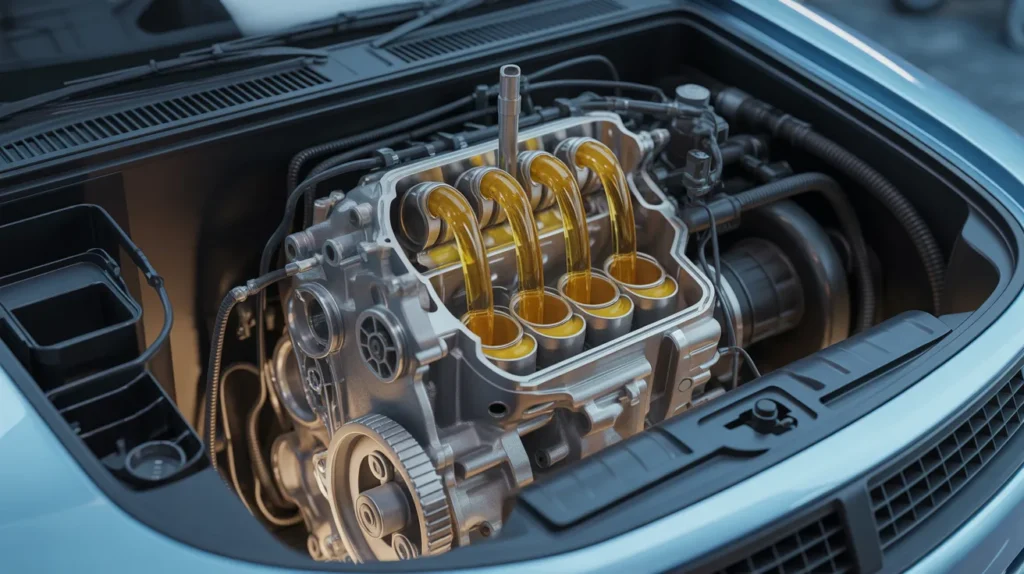
Oil pressure keeps engine parts coated and separated. After an oil change, the pressure needs a few moments to rebuild. If it doesn’t rise quickly, you may notice noise or low oil pressure after oil change warnings.
How the Oil Pump Builds Pressure
The oil pump must refill the filter and push oil through the system before full lubrication returns. If there’s air trapped or an oil pump problem, circulation may be slow, causing brief knocking until pressure stabilizes.
Blocked Flow and Filter Issues
Oil moves through narrow passages, so even small restrictions matter. A clogged oil filter or debris can limit flow, reducing pressure and increasing friction between parts.
What a Dry Engine Start Means
A dry engine start happens when the engine runs before oil reaches all components. This short delay in lubrication can cause temporary tapping or knocking sounds right after service.
Now, let’s look at how to tell whether the noise is harmless or a sign of a serious engine issue.
Is Engine Knocking Serious or Temporary?
Engine knocking can be temporary or serious, depending on what’s causing it. If the sound appears briefly after startup and fades as oil circulates, it’s often harmless. However, if the noise stays loud, worsens, or affects performance, it may signal deeper engine damage that requires immediate attention.
Engine Ticking vs. Knocking Difference
Understanding the engine ticking vs knocking difference is important. Ticking is usually light and rhythmic, often related to valves or delayed oil flow. True knocking sounds deeper and heavier, like metal hitting metal. This typically points to lubrication failure or internal wear.
Rod Knock Symptoms and Engine Damage Signs
Serious problems show clear engine damage signs. Common rod knock symptoms include a deep thudding noise that gets louder during acceleration, noticeable vibration, or a drop in oil pressure. These signs rarely disappear without repair and often indicate internal bearing damage.
When to Stop Driving Immediately
If the noise fades within a few minutes and oil levels are correct, monitoring may be enough. But driving with an engine knock that remains loud or increases under load can cause severe internal damage. Ignoring it may lead to costly repairs, including complete engine failure.
Next, let’s explore practical steps you can take to fix engine knocking and prevent long-term damage.
How to Fix Engine Knocking After Oil Change
The good news is that most cases of engine knocking after oil change are fixable. In many situations, the issue is related to oil level, filter installation, or using the wrong oil type. Start with these simple checks before assuming serious engine damage.
Step 1: Check Oil Level and Condition
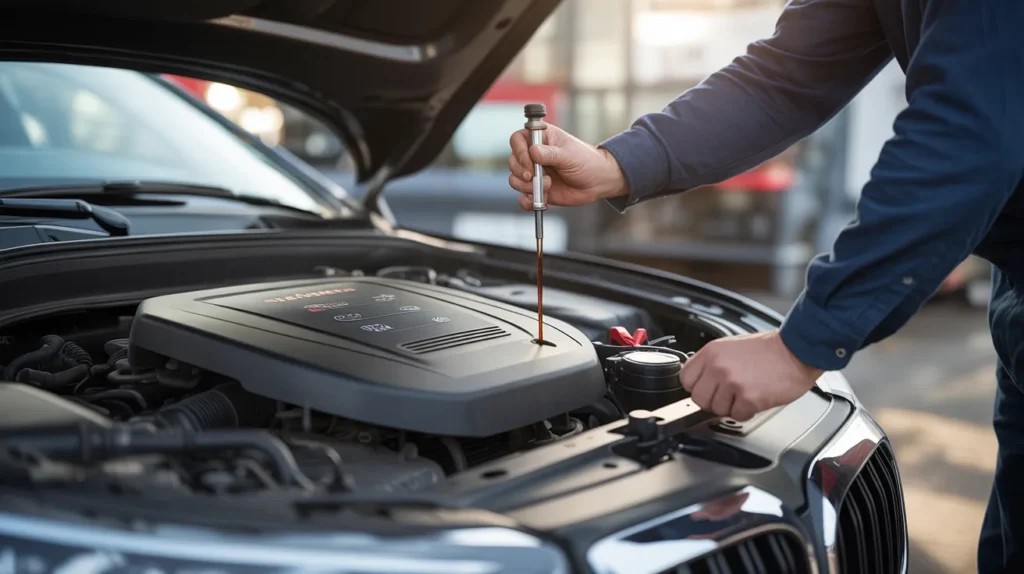
First, check the oil level using the dipstick when the engine is cool and parked on a level surface. Low oil reduces lubrication, while overfilled oil can foam and lose effectiveness. Adjust the level carefully to prevent noise caused by poor circulation.
Step 2: Verify Oil Specification
Confirm that the oil matches your vehicle’s recommended viscosity. If the wrong type was added, you may need to change oil again and use the correct oil grade to restore proper pressure and protection.
Step 3: Inspect and Replace the Oil Filter
Examine the filter for leaks, looseness, or a damaged seal. A poor seal can reduce oil pressure and create knocking sounds. If necessary, replace the oil filter with a quality part and tighten it properly.
Step 4: Reset ECU if Needed
In rare cases, sensor miscommunication after service may trigger warning signs. Resetting the ECU or driving briefly may resolve minor calibration issues.
Step 5: Get a Mechanic Inspection
If knocking continues, schedule a mechanic inspection. Persistent noise could indicate deeper lubrication or bearing damage that requires professional diagnosis.
Taking action quickly helps prevent long-term engine damage and keeps your vehicle running smoothly.
Conclusion
Engine knocking after oil change is usually caused by simple issues like using the wrong oil grade, low or overfilled oil, or a loose oil filter. In most cases, the knocking is temporary and can be fixed with basic checks at home or during a quick service.
Always use the correct oil grade, ensure proper service, and monitor your engine for unusual noises. If knocking persists or the sound grows louder, a professional mechanic inspection is recommended to prevent long-term engine damage.
Regular maintenance, timely oil changes, and careful attention to oil levels keep your engine running smoothly, quietly, and reliably. Next, we’ll answer some common FAQs about engine noise after oil changes.
FAQs
What causes my engine to knock after an oil change?
Engine knocking after an oil change is usually caused by a low oil level, the wrong oil grade, or a loose oil filter. Checking and correcting these often stops the noise quickly.
Can using the wrong oil cause engine knocking?
Yes. Using oil with incorrect viscosity reduces lubrication and can trigger knocking, especially during cold starts.
How do I know if the knocking is serious?
Persistent knocking that grows louder, causes vibrations, or comes with warning lights may indicate internal damage. A mechanic inspection is recommended.
Can I fix engine knocking myself?
In many cases, yes. You can check the oil level, replace a faulty oil filter, or change to the correct oil grade to resolve the issue.
Is it safe to drive with the engine knocking after an oil change?
Temporary, minor knocking is usually safe for short distances. However, persistent or worsening noise means stop driving and consult a professional to prevent engine damage.
If you’re also dealing with ignition issues or performance problems, the right spark plugs can make a big difference. Check out our detailed guide on the Ford Mustang GT here:
If ignition components are causing performance issues, check our guide on the best spark plugs for the Ford Mustang GT or explore options for the Honda Fit to ensure smooth engine operation.

