Introduction
Are you worried about unexpected expenses when your car starts leaking oil? Understanding the engine oil leak repair cost can feel confusing, especially when prices vary depending on the type of leak, vehicle model, and repair method. Many car owners struggle to know whether a leak is minor or serious and how much they should realistically expect to pay.
This guide will help you make sense of the repair process so you can plan and avoid unnecessary stress. Inside, you’ll find clear explanations of common causes of engine oil leaks, typical symptoms to watch for, professional diagnosis methods, and expert tips on preventing leaks in the future. By the end, you’ll have a complete understanding of engine oil leak repair cost and what to expect before visiting a mechanic.
Table of Contents
What Is an Engine Oil Leak?
Engine oil plays a crucial role in keeping an engine running efficiently. It lubricates internal moving parts, reduces friction, controls temperature, and helps prevent premature wear. When the oil remains properly sealed inside the engine, it protects vital components and supports long-term engine performance.
An engine oil leak happens when oil escapes through worn-out gaskets, damaged seals, or loose engine parts. Continuous exposure to heat, pressure, and aging can weaken these components over time, allowing oil to seep out of the engine system.
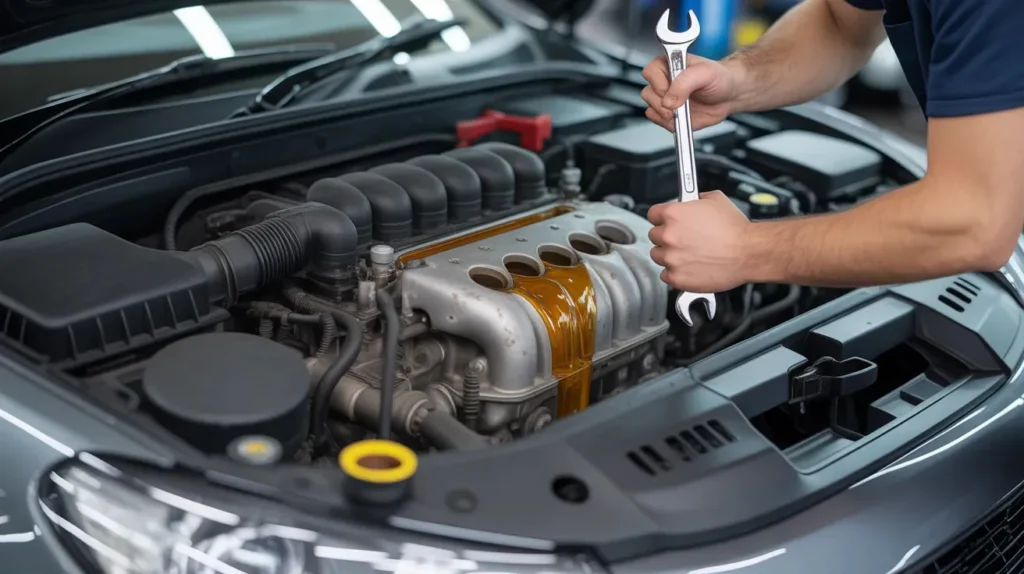
Some of the most common leak locations include the valve cover gasket, oil pan gasket, oil filter housing, drain plug, and crankshaft seals. Ignoring these leaks can gradually reduce engine oil levels and increase the risk of serious mechanical damage. Identifying and fixing leaks early can help minimize engine oil leak repair costs and maintain overall engine reliability.
Causes of Engine Oil Leaks
Valve Cover Gasket Failure
The valve cover gasket is designed to seal the top portion of the engine and prevent oil from leaking out. Over time, constant heat exposure and engine pressure can cause the gasket to become brittle or develop cracks. When this seal weakens, oil may start leaking around the valve cover area and gradually spread across engine components.
Oil Pan Gasket Damage
The oil pan stores engine oil at the bottom of the engine and relies on a gasket to keep oil contained. This gasket can wear out due to age, temperature changes, or damage from road debris. When it fails, oil may leak slowly, especially after the vehicle has been parked or while the engine is running.
Oil Filter Housing Leak
The oil filter housing helps regulate oil flow through the filtration system. A worn seal, loose housing, or incorrect installation during routine maintenance can allow oil to escape from this section and spread quickly inside the engine compartment.
Rear Main Seal Leak
The rear main seal is located between the engine and transmission and handles continuous rotation. With time, friction and heat can cause the seal to deteriorate. When this happens, oil begins leaking from the rear of the engine, which may increase the engine oil leak repair cost due to the complex repair process.
Drain Plug Issues
The drain plug closes the oil pan after an oil change. If it becomes loose, stripped, or lacks a proper sealing washer, oil can leak gradually. Fortunately, this type of leak is usually easier to detect and repair when addressed early.
Car Oil Leak Symptoms
Recognizing the signs of a car oil leak early is crucial to prevent engine damage and maintain vehicle performance.
Burning Oil Smell
A noticeable burning oil odor usually indicates that oil is leaking onto hot engine components. This smell can enter the cabin while driving or linger after parking, signaling a potential leak that needs attention.
Oil Stains or Puddles Under the Vehicle
Dark brown or black stains on the ground where your car is parked are a clear indication of an oil leak. The size and spread of the puddle can help gauge the severity of the leak.
Smoke Coming From the Engine
Oil that drips onto hot surfaces may produce smoke under the hood. This often appears after driving and should be addressed promptly to prevent further engine damage.
Low Oil Warning Light
A leak can quickly lower oil levels, triggering the dashboard warning light. Acting on this early can help minimize engine oil leak repair costs and keep your engine running safely.
Engine Gasket Failure and Its Role in Oil Leaks
Engine gaskets play a crucial role in keeping engine components sealed and preventing oil from leaking. They sit between metal surfaces and help maintain proper pressure, ensuring smooth lubrication and optimal engine performance.
Over time, gaskets can deteriorate due to heat, pressure, and natural wear. They may harden, crack, or lose their flexibility, particularly if the engine experiences overheating or maintenance is neglected.
When a gasket fails, oil escapes through the weakened seal, often leaking onto engine parts or the ground. Common gasket-related leaks include the valve cover and oil pan gaskets. If left unaddressed, these leaks can lead to engine damage and costly repairs.
Detecting gasket problems early not only protects the engine but also helps manage engine oil leak repair cost-effectively. Regular inspections and timely maintenance play a key role in keeping your engine sealed and running smoothly.
Oil Leak Diagnosis Methods
Identifying the source of an engine oil leak is essential before attempting any repair. Proper diagnosis ensures that only the faulty parts are addressed, helping to avoid unnecessary work and reduce engine oil leak repair costs.
Visual Inspection
The simplest and most common method involves carefully examining the engine for wet or oily areas, damaged gaskets, or loose components. Mechanics also inspect the underside of the vehicle and may clean the engine to track fresh leaks more accurately.
UV Dye Testing
In this technique, a special dye is added to the engine oil. Once the engine runs briefly, a UV light is used to pinpoint where the oil is escaping. This method makes small or hidden leaks easy to detect and eliminates guesswork.
Pressure Testing
Pressure testing evaluates whether gaskets and seals can maintain proper oil containment under operating conditions. By applying controlled pressure, leaks that might not appear when the engine is
How to Prevent Engine Oil Leaks
Preventing engine oil leaks is largely about following consistent maintenance habits that protect seals, gaskets, and critical engine components.
Regular Oil Changes
Keeping up with scheduled oil changes removes contaminants that can degrade seals and gaskets. Fresh oil also ensures proper lubrication, reducing stress on engine parts that could otherwise lead to leaks.
Using the Correct Oil Type
Always choose the oil grade recommended by your vehicle manufacturer. Using the wrong type—too thick or too thin—can place extra pressure on seals, causing them to wear out faster.
Proper Seal and Gasket Maintenance
Seals and gaskets naturally age over time. Replacing worn or damaged components promptly prevents small leaks from turning into major issues.
Routine Vehicle Inspections
Regular inspections help detect minor oil seepage, loose drain plugs, or damaged parts early. Addressing these issues quickly can help minimize engine oil leak repair costs and prevent serious engine damage.
By maintaining these habits, you ensure your engine’s oil system remains sealed, reliable, and long-lasting.
Conclusion
Engine oil leaks are common, but they should never be overlooked. Knowing the causes, symptoms, and diagnosis methods allows drivers to identify problems early and act before serious engine damage occurs.
Consistent maintenance, using the correct oil type, and regular inspections are key to preventing leaks and extending engine life. Early detection makes repairs simpler, faster, and more effective.
Taking proper care of your engine not only safeguards performance and reliability but also helps control engine oil leak repair costs over time. Staying proactive with maintenance ensures a healthier engine, smoother operation, and fewer unexpected issues down the road.
FAQs
1. What causes an engine oil leak?
Engine oil leaks are usually caused by worn gaskets, damaged seals, loose drain plugs, or aging engine components. Excessive heat and poor maintenance can accelerate wear and lead to leaks.
2. What are the signs of an oil leak?
Common signs include oil stains under the vehicle, a burning oil smell, smoke from the engine, and the low oil warning light on the dashboard.
3. Is it safe to drive with an oil leak?
No. Even minor leaks can reduce oil levels, causing overheating, friction, and potential engine damage. Prompt repairs are essential to protect your engine.
4. How much does engine oil leak repair cost?
Repair costs vary depending on the leak type. Simple fixes like tightening a drain plug are inexpensive, while gasket or seal replacements can be more costly due to labor intensity.
5. How can oil leaks be prevented?
Regular oil changes, using the correct oil type, maintaining gaskets and seals, and performing routine vehicle inspections help prevent leaks and keep your engine healthy.
Best Engine Oil for Honda Accord – Top 2026 Picks
Looking for the perfect engine oil for your Honda Accord? This guide breaks down the best options for 2026, helping you choose the right oil to boost engine performance, efficiency, and longevity. Check out this article to make sure your Accord stays in top shape.
Best Engine Oil for Toyota Camry
Want to keep your Toyota Camry running smoothly? Discover the top engine oil options recommended for 2026, with tips on selecting the right type for your engine. Read this article to find the best oil and protect your Camry from wear and tear.